

Pigmentation Before and After: A Real Patient's Skin Transformation Story
Published on 2026-11-16 | By Admin
What can Pigmentation Before and After results tell us about a professional skin treatment journey? For individuals dealing with persistent dark spots, acne marks and uneven skin tone, understanding the possible improvements can be an important step towards choosing the right treatment.
Srilatha, a 26-year-old IT professional from Andhra Pradesh, experienced these challenges while managing PCOS and irregular menstrual cycles. Frequent pimples, visible acne marks, and dark spots made her increasingly unhappy with her skin. Despite trying to manage these concerns, achieving a more even-looking complexion remained difficult.
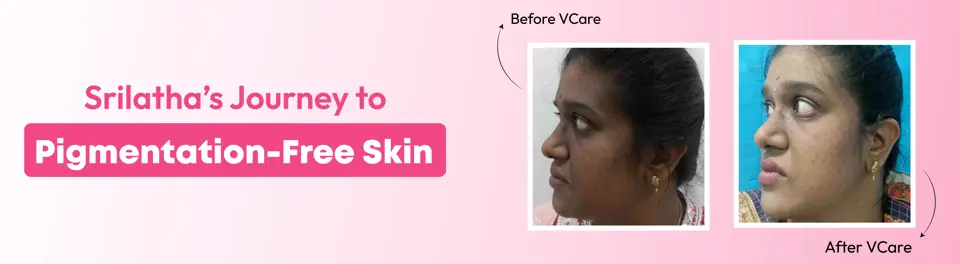
Her search for a solution eventually led her to VCare Hair and Skin Clinic in Guntur, where she underwent a professional skin assessment and received a personalised treatment plan.
This pigmentation before and after story explores Srilatha’s skin concerns, her treatment journey with Pico Laser and Yellow Peel, and the role of professional guidance and homecare in supporting skin improvement.
Understanding Srilatha's Skin Concerns
Srilatha's PCOS Pigmentation Journey began with frequent breakouts, persistent acne marks, dark spots and uneven skin tone. While managing PCOS and irregular menstrual cycles, she noticed that these concerns were becoming increasingly difficult to manage.
Working in the IT sector also meant managing work-related stress, which can influence skin health and may contribute to acne flare-ups in some people. However, pigmentation and acne can have several contributing factors, so it is important not to attribute every skin concern to stress or PCOS alone.
For Srilatha, the visible marks and persistent breakouts became a source of frustration. Over time, she found it increasingly difficult to feel comfortable with her skin.
Her experience highlights why understanding the underlying skin concern is an important first step before choosing a pigmentation treatment.
Professional Skin Assessment at VCare
While browsing Instagram, Srilatha came across an advertisement for VCare. Hoping to find a solution for her persistent pigmentation and acne marks, she decided to visit the VCare Hair & Skin Clinic in Guntur for professional guidance.
During her consultation, her doctor conducted an AI-based skin analysis to assess pigmentation, hydration, elasticity and sebum levels. The evaluation helped identify her skin concerns and understand the factors contributing to her uneven skin tone.
As pigmentation and acne marks can have multiple causes, including hormonal influences associated with PCOS, a personalised approach was important. Based on her skin assessment and individual needs, her doctor recommended a combination of Pico Laser and Yellow Peel to address her pigmentation and post-acne marks.
Srilatha's Pigmentation Treatment Journey
Srilatha's personalised treatment plan combined Pico Laser and Yellow Peel to address pigmentation, acne marks and uneven skin tone. Her journey involved professional skin assessment, targeted treatment and aftercare guidance.
Initial Consultation: Understanding Her Skin
Srilatha's skin condition, pigmentation concerns and acne marks were evaluated to determine a suitable treatment approach. Based on the assessment, her doctor recommended a combination of treatments tailored to her skin's needs.
During Treatment: Pico Laser and Yellow Peel
Pico Laser uses ultra-short laser pulses to target pigment particles and help reduce the appearance of selected pigmentation concerns.
Yellow Peel, a chemical peel, was included to support skin renewal and improve uneven skin tone and visible pigmentation.
Together, these treatments formed part of her personalised skin care plan, with the number of sessions and treatment response depending on her individual skin condition.
Final Outcome: Working Towards a More Even Complexion
Uneven Skin Tone Improvement was one of the primary goals of Srilatha's treatment journey. Pico Laser and Yellow Peel were recommended to address dark spots, post-acne marks and overall complexion concerns.
Her journey highlights how combining suitable professional treatments with consistent aftercare may support a brighter, more even-looking complexion. However, the extent of improvement varies based on pigmentation type, hormonal factors and individual skin response.
Homecare Routine: Supporting Skin After Treatment
Professional treatments are only one part of managing pigmentation. Appropriate homecare helps protect the skin, reduce irritation, and support the results achieved through treatment.
The following habits may help maintain healthier-looking skin:
1. Apply Sunscreen Daily
Sun exposure can worsen certain types of pigmentation and contribute to the recurrence of dark spots. Use a broad-spectrum sunscreen with SPF 30 or higher, reapply as directed, and consider additional protection such as hats and shade.
2. Follow a Gentle Skincare Routine
Use a mild cleanser and avoid harsh scrubs or products that cause burning, stinging, or excessive dryness. Irritation can worsen pigmentation in some skin types.
3. Keep the Skin Moisturised
A suitable moisturiser helps maintain the skin barrier and reduce dryness, particularly after treatments that cause temporary sensitivity.
4. Follow Professional Aftercare Advice
After Pico Laser or a chemical peel, skincare recommendations should be based on the procedure performed and the skin’s response. Follow the treating clinician’s advice on cleansing, moisturising, sun protection, and when to restart active ingredients.
5. Attend Recommended Follow-Ups
Follow-up appointments allow the clinician to monitor progress, review any side effects, and adjust the treatment plan if needed.
Lifestyle Changes That Supported Better Skin Care
Alongside professional treatment, consistent daily habits can contribute to overall skin health. For Srilatha, lifestyle and dietary guidance formed part of her broader approach to caring for her skin.
Manage Stress
Work-related stress can affect sleep and may aggravate acne in some individuals. Relaxation techniques, regular physical activity, and realistic work-life boundaries may help support general well-being.
Maintain a Balanced Diet
A varied diet containing vegetables, fruits, protein sources, and other nutrient-rich foods supports overall health. No single food or diet can guarantee that pigmentation will disappear, but balanced nutrition is an important part of general skin care.
Prioritise Quality Sleep
Adequate sleep supports overall health and helps maintain a consistent daily routine. Aim for regular sleep habits that suit your needs.
Address PCOS With Appropriate Medical Guidance
PCOS can be associated with hormonal changes and acne. Managing the condition with a qualified healthcare professional may help address relevant underlying concerns, although the effect on pigmentation varies.
Stay Consistent With Sun Protection
Sun protection is particularly important when managing pigmentation. Even after visible improvement, continued exposure without adequate protection can contribute to the return or darkening of certain spots.
Pigmentation Before and After: Understanding the Results
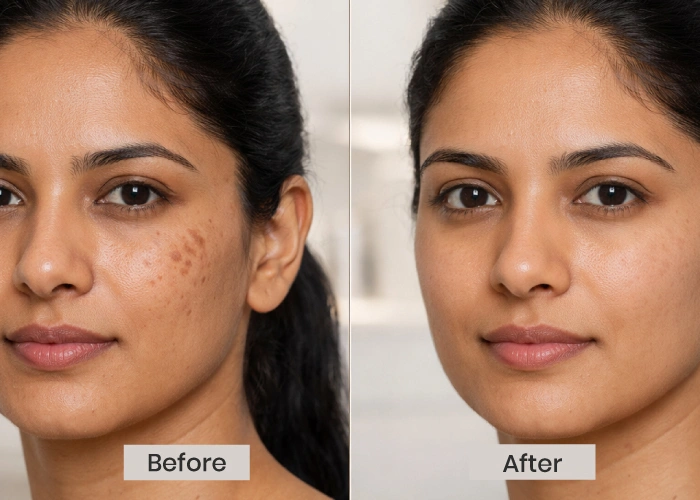
When looking at pigmentation treatment results, it is important to consider more than a single photograph. Skin tone, lighting, camera settings, and makeup can all influence how the complexion appears.
For Srilatha, the treatment plan was intended to address visible pigmentation, post-acne marks, and uneven skin tone through Pico Laser and Yellow Peel.
When assessing a skin transformation, the main areas to look at include:
- Pigmentation: Whether dark spots and post-acne marks appear less noticeable.
- Skin brightness: Whether the complexion looks more even and refreshed.
- Skin texture: Whether the overall surface appears smoother.
- Consistency of improvement: Whether changes are maintained with appropriate homecare and follow-up.
- Personal experience: Whether the patient feels more comfortable with their skin after treatment.
The outcome of any pigmentation treatment depends on the individual's skin condition, the cause and depth of pigmentation, treatment suitability, and adherence to aftercare. Not everyone will experience the same degree of improvement, and pigmentation can return, particularly when contributing factors persist.
Authentic before-and-after photographs taken under comparable conditions, along with documented session details, are the best way to demonstrate an individual patient's progress.
Srilatha's Skin Transformation Story: Beyond the Treatment
Srilatha's experience offers a personal perspective on a Real Pigmentation Success Story, beginning with her decision to seek professional care for persistent acne marks, dark spots and uneven skin tone.
Her journey highlights the value of understanding the skin before choosing a treatment, following an individualised plan, and maintaining appropriate skincare habits alongside professional care.
While treatments may help improve the appearance of pigmentation and acne marks, healthy skin does not need to be flawless. Progress can look different for each person, and a realistic treatment plan should focus on the individual's concerns rather than promising a particular complexion or outcome.
Conclusion
Srilatha’s journey highlights how professional skin assessment, personalised treatments and consistent aftercare can help address pigmentation, acne marks and uneven skin tone.
While pigmentation before and after results vary depending on individual skin conditions, the right treatment approach can support visible skin improvement.
At VCare Hair & Skin Clinics, explore personalised pigmentation treatments, including Pico Laser and Yellow Peel, based on your skin’s needs.
Frequently Asked Questions
1. How long does it take to notice pigmentation treatment results?
The timeline varies according to the type and depth of pigmentation, the treatment used, and individual skin response. Some people may notice gradual changes over several sessions, while others require a longer treatment plan. Your clinician can provide a more realistic estimate after assessing your skin.
2. Can pigmentation return after treatment?
Yes. Pigmentation can return or become darker again, particularly when sun exposure, hormonal influences, or other contributing factors persist. Consistent sun protection and appropriate follow-up care can help manage these risks.
3. Does everyone get the same pigmentation treatment results?
No. Results vary depending on skin type, pigmentation depth, the underlying cause, treatment suitability, and adherence to aftercare. A treatment that suits one person may not be appropriate for another.
4. Is homecare important after Pico Laser and Yellow Peel?
Yes. Following the clinician’s aftercare instructions is important to protect the skin while it heals and reduce the risk of irritation. Sunscreen, gentle cleansing, moisturising, and avoiding unapproved active products may form part of the recommended routine.
5. Can PCOS influence acne and pigmentation?
PCOS is associated with hormonal changes that can contribute to acne in some people. Acne may then leave post-inflammatory marks or pigmentation. However, not every pigmentation concern is caused by PCOS, and managing the condition may require medical guidance alongside skin treatment.
6. Why is a professional skin assessment important before pigmentation treatment?
Different pigmentation concerns can look similar but respond differently to treatment. A professional assessment helps identify the likely cause, evaluate skin sensitivity and other relevant factors, and determine whether Pico Laser, a chemical peel, another approach, or a combination may be appropriate.
7. Is Pico Laser suitable for all types of pigmentation?
No. Pico Laser may be suitable for selected pigmentation concerns, but it is not the right choice for every skin condition or every type of dark spot. A qualified clinician should assess the pigmentation and skin type before recommending treatment.
8. What should you look for in Hyperpigmentation Before and After results?
When evaluating Hyperpigmentation Before and After results, look for changes in the appearance of dark spots, acne marks and uneven pigmentation. Consistent lighting, standardised photographs and professional skin assessments help provide a more reliable comparison.

 info@vcaretrichology.com
 +91 709 2525 252
 View All Locations


