

Acne Scar Treatment: Causes, Symptoms, Types, Procedures & Results

.svg)
Acne scars are tiny marks or dents that remain on the skin after pimples have healed. While mild acne may leave behind dark spots or pimple marks, deeper breakouts can damage collagen and lead to long-lasting scars that change your skin’s texture. Advanced acne scar treatment may help improve overall skin texture and scar appearance.


What Are Acne Scars?
Acne scars are permanent or long-lasting marks that can develop when severe acne damages the deeper layers of the skin. As inflamed pimples, cysts, or nodules heal, the skin may produce too little or too much collagen, resulting in uneven skin texture and visible acne scars.
Acne Scarring Causes
Common causes of acne scars include inflammation, squeezing pimples, delayed healing, collagen damage, severe acne, and lack of early acne treatment.

Squeezing Acne
Forceful popping of pimples pushes the infection deeper into the skin, damages nearby tissue, and leads to scarring.

Inflammation
Deep or prolonged inflammation damages skin tissue and increases the chances of scar formation.

Delayed or Improper Healing
Frequent touching, picking, or irritation of pimples slows the healing process and worsens skin damage.

Loss or Excess of Collagen
When the skin heals after acne, collagen insufficiency causes small dents, while excess collagen leads to raised scars.

Severity of Acne
Severe, cystic, or nodular acne penetrates deep into the skin and is more likely to leave lasting scars.

Genetic Factors
Some people are naturally more prone to scarring due to their skin’s healing pattern.

Lack of Early Treatment
Ignoring acne or using unsuitable products worsens inflammation, leading to stubborn marks and scars.
Types of Acne scars
Different types of acne scars include deep ice pick scars, broad boxcar scars, rolling scars with uneven texture, and raised hypertrophic scars caused by severe acne damage.
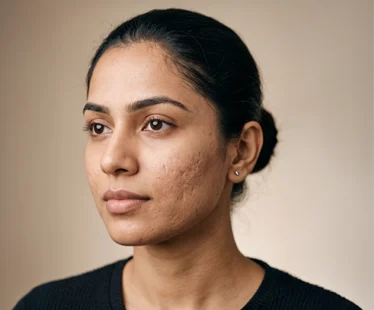
Ice Pick Scars
- These are deep, narrow pits that look like tiny holes on the skin’s surface.
- They form when severe acne damages the skin tissue deeply.
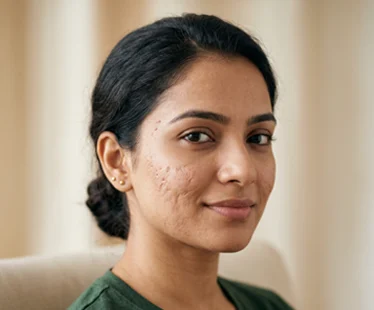
Boxcar Scars
- These are broad, round or oval depressed marks with sharp edges.
- They usually appear on the cheeks and temples due to loss of collagen.

Rolling Scars
- These are wave-like or uneven depressions that give the skin a rough, bumpy texture.
- They form when fibrous bands of tissue pull the skin downward, creating an uneven surface.


Visible Signs of acne scars
Visible acne scar symptoms may include uneven texture, depressed scars, raised bumps, and rough skin caused by post-acne collagen changes.
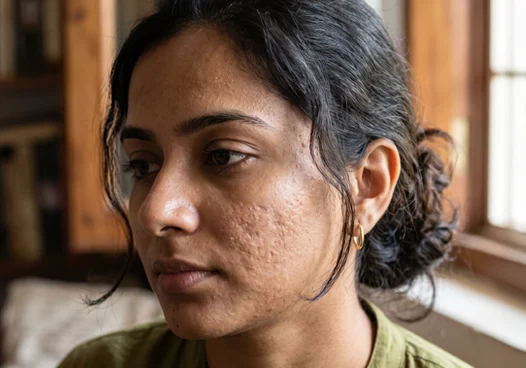
Uneven Texture
Skin feels rough or bumpy to touch.
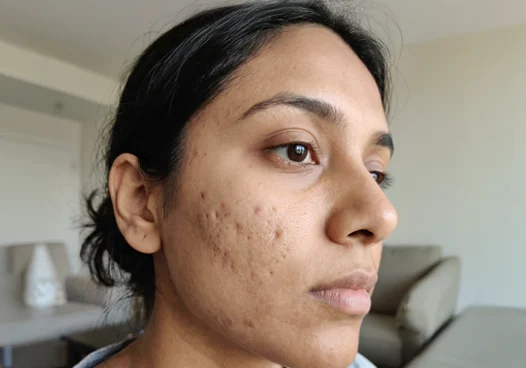
Depressed Marks
Small depressions or indents left on the skin after acne heals.
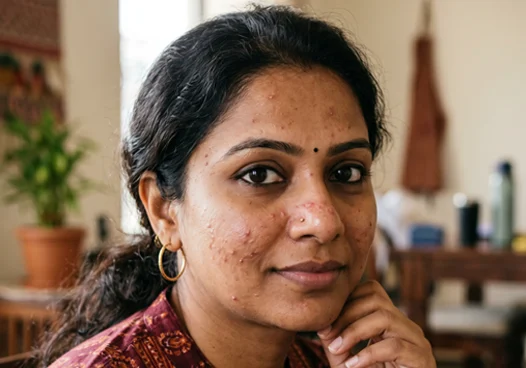
Raised Bumps
Thick, raised scars that form above the skin’s surface.
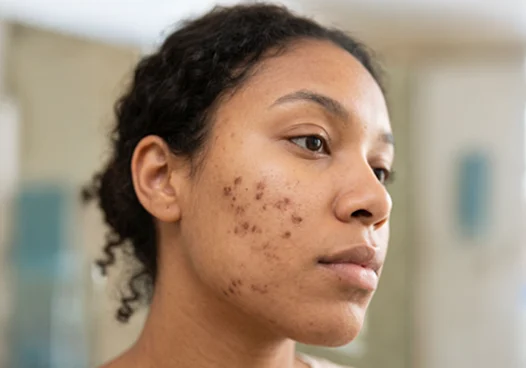
Dark Spots
Brown or red marks that stay on the skin after acne clears.
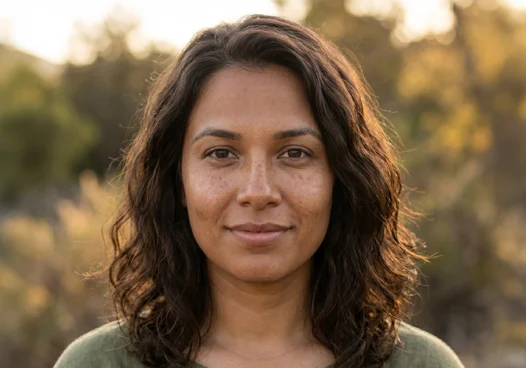
Discoloration
Irregular skin tone with dark or patchy areas.
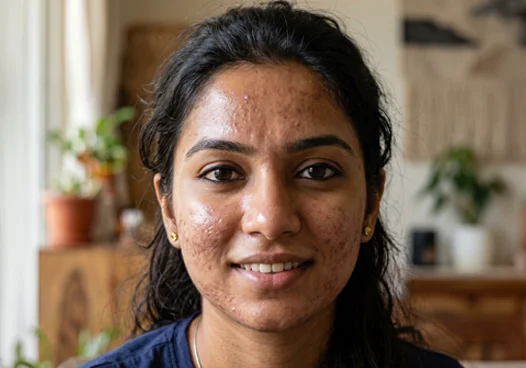
Shiny Areas
Scarred skin appears smoother or glossier than normal.
.png)
.png)
When to See a Doctor for Acne Scar Treatment?
If home remedies or OTC treatments haven’t helped and your acne shows the following signs, it’s best to seek professional care from a dermatologist:
VCare’s Step-by-Step Process for Acne Scar Treatment

Expert Consultation

Skin Diagnostics

Treatment plan
Acne Scar Treatments at Vcare
Advanced acne scar treatments help reduce visible scars, improve skin texture, and support healthier skin through collagen repair and regeneration.
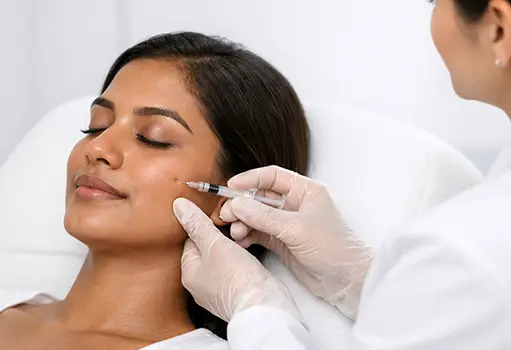
ExoGlo
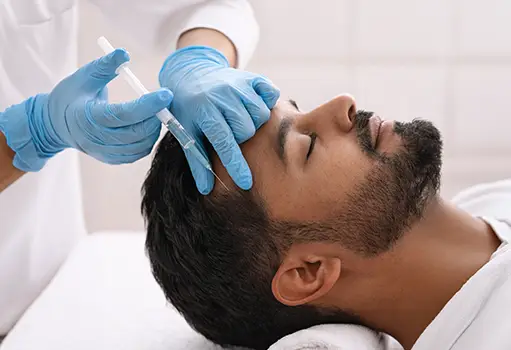
GFC Skin Treatment
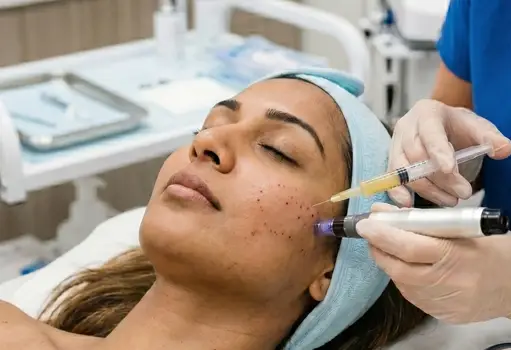
Stemgen Pro PRP Skin Treatment
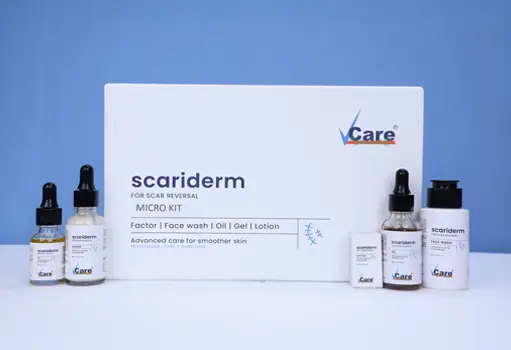
Scariderm Kit
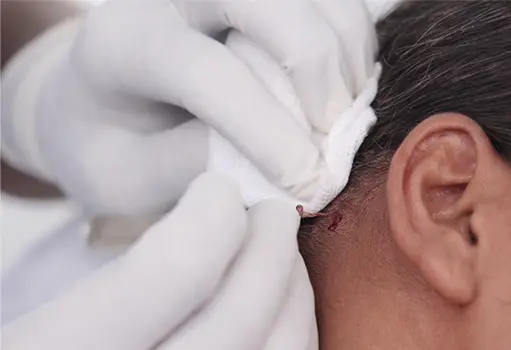
CellGraft skin Treatment
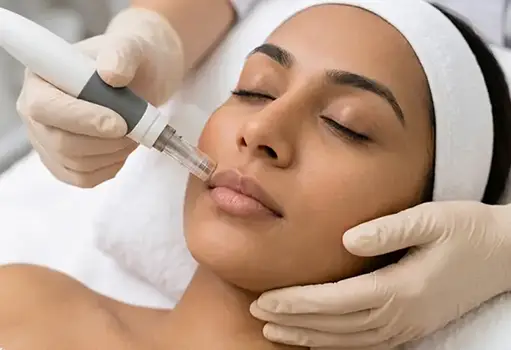
Microneedling skin Treatment
Why Choose VCare for Acne Scar Treatment?
VCare combines advanced acne scar treatments, personalized care, expert guidance, and strict safety protocols to help improve acne scars, uneven skin texture, and overall skin appearance.

Advanced Technologies designed to maximize results while minimizing downtime.

Strict Hygiene & Safety Protocols for a safe, sterile, and comfortable treatment experience.

Customized Solutions for Every Concern with visible improvements often seen within a few sessions

Dedicated Support from consultation to post-treatment care, with complete cost transparency.

A Legacy of Trust built by over 1 million satisfied clients across India through clinically driven results.
Before & After Acne Scar Treatment Results
Explore the visible results of personalized acne scar treatments that helped improve uneven skin texture, reduce acne scars, and support smoother, clearer, and healthier-looking skin.
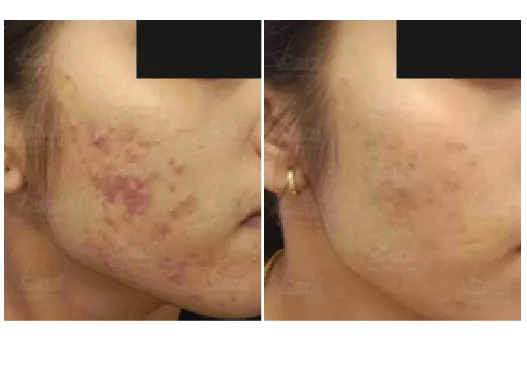
Before
After
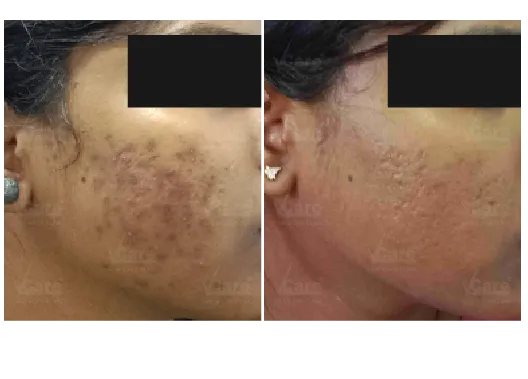
Before
After
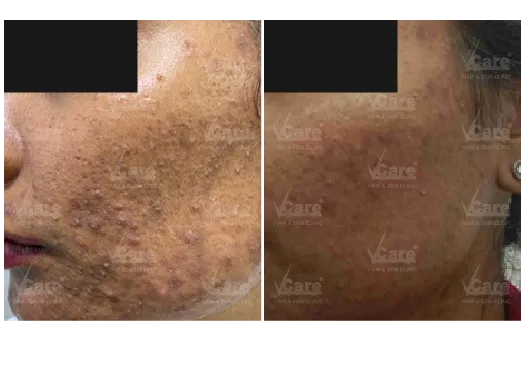
Before
After
Hear From Our Expert Doctors

Start Your Journey to Smoother, Clearer Skin
If you are searching for acne scar treatment near you, visit your nearest VCare branch for personalized skin care solutions. Our advanced acne scar treatments help improve uneven skin texture, reduce visible acne scars, and support smoother, clearer, and healthier-looking skin.
Contact us to know more about acne scar treatment options and consultation details based on your skin condition, scar type, and treatment goals.
Real Experiences Shared by Our Clients


Vamsi Krishna
Tiruvallur - TamilNadu


Gokulhari Hari
Tiruvallur - TamilNadu

ashwini h
Tumkur - Karnataka
sunera shiek
Mangalore - Karnataka
Deepika Viji
Urapakkam - Chennai
MONAVIZHI r
Urapakkam - ChennaiFrequently Asked Questions
Acne scars are marks, dents, or raised areas that develop after acne heals. They occur when the skin’s natural healing process is disrupted, often due to inflammation, collagen imbalance, or skin damage caused by severe acne.
Acne scars form when inflamed pimples damage skin tissue. Factors like squeezing pimples, severe cystic acne, delayed healing, collagen loss or excess, and lack of timely treatment can all contribute to scarring.
Dark spots (PIH) are flat and caused by excess pigmentation, while acne scars affect skin texture, appearing as dents or raised areas. A dermatologist can accurately identify your skin concern through a professional evaluation.
While complete removal may not always be possible, advanced acne scar treatments can significantly reduce their appearance. Options like laser resurfacing, microneedling, chemical peels, PRP therapy, or dermal fillers can visibly smooth and rejuvenate the skin.
The best treatment depends on your scar type, depth, and skin type. Dermatologists often recommend a combination of procedures—like microneedling with PRP, fractional laser, or subcision—to achieve optimal results.
Treatment duration varies by method and scar severity. Most patients notice visible improvement within 4 to 6 sessions, with smoother, clearer skin appearing gradually over time.
Home remedies may help lighten mild pigmentation but cannot treat deep or textured scars. Professional treatments are essential for repairing damaged skin and stimulating collagen regeneration.
Yes, when performed by qualified dermatologists. Treatments are customized based on your skin tone, sensitivity, and scar type to ensure safe and effective results with minimal downtime.
Yes, when performed by qualified dermatologists. Treatments are customized based on your skin tone, sensitivity, and scar type to ensure safe and effective results with minimal downtime.

 info@vcaretrichology.com
 +91 709 2525 252
 View All Locations


