

Male Pattern Baldness Success Story: Soundararajan's Hair Restoration Journey
Published on 2026-10-27 | By Admin
Hair loss in your 20s can feel particularly difficult. You may start noticing a receding hairline, thinning areas or bald spots while your friends are still enjoying their usual hairstyles.
For Soundararajan, hair loss started when he was just 22. Over the next five years, his receding hairline and bald spots became increasingly noticeable, and he began feeling that his appearance made him look older than his actual age.
He tried the approach many people turn to first—regular oiling and scalp massage. But when the hair growth did not improve, he decided it was time to understand what was happening and seek professional guidance.
This is Soundararajan's male pattern baldness success story and how his journey at VCare progressed from assessment to hair restoration and ongoing care.
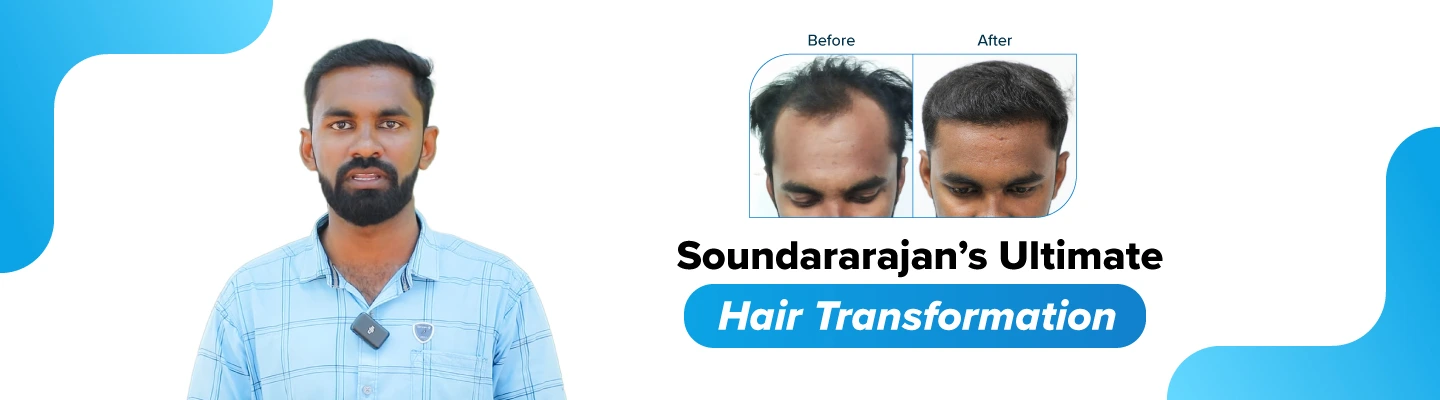
Meet Soundararajan
Soundararajan was 27 when he decided to seek professional help for his hair loss.
His hair loss had started around the age of 22 and had gradually progressed over more than five years. The receding hairline and noticeable bald areas had become difficult for him to ignore.
More than the physical change, the hair loss began affecting how he felt about himself.
When he was around his peers, he often felt that he looked older than them. He wanted to understand whether anything could be done to address the hair loss rather than continuing to watch it progress.
Recognising the Early Signs of Hair Loss
At first, Soundararajan relied on regular oiling and scalp massage. He made time to oil his hair three to four times a week and remained consistent with the routine.
However, after several years, he did not notice the improvement he was hoping for.
The hairline continued to recede, and the bald areas became more prominent.
This was the point when he realised that simply maintaining a regular haircare routine was not enough for his concern. Instead of continuing to experiment with home remedies, he decided to get his hair and scalp professionally assessed.
His experience also highlights an important point: when hair loss keeps progressing, understanding the pattern and possible contributing factors can be more useful than simply trying another hair product.
The Consultation and Hair Assessment
Soundararajan found VCare while searching online for a hair clinic and decided to visit a nearby VCare clinic for a consultation.
During the consultation, he explained his hair loss history and concerns to the haircare expert.
A Hair Mineral Analysis was recommended to evaluate his nutritional status. According to his case assessment, the analysis identified deficiencies in several minerals.
His consultation also brought attention to his diet. He was found to have insufficient intake of fruits, vegetables and proteins.
Stress was another factor discussed during his consultation. Soundararajan described experiencing emotional, work-related and domestic stress, which the haircare team considered alongside his existing hair loss concerns.
The assessment therefore looked beyond the visible baldness and considered other factors that could be relevant to his overall hair health.
The Personalised Hair Care Plan
Based on Soundararajan's hair loss and assessment, a hair transplant was recommended as part of his restoration plan.
He underwent VCare's Activated Follicular Transplantation (AFT) procedure. According to the original case information, the technique involved transplanting follicular units along with recombinant growth factors.
For Soundararajan, the decision to undergo a transplant did not come without hesitation.
However, he felt supported throughout the process and successfully completed the procedure.
His journey did not end with the transplant.
He was given post-treatment guidance on caring for his hair and scalp and was advised to attend maintenance sessions. He also received the INVACare kit, which included a Hair Growth Shampoo, Daycare/Nightcare Lotion and nutritional supplements.
Alongside his post-treatment care, Soundararajan was advised to pay closer attention to his diet. He received personalised guidance on foods, nuts and seeds that could support his nutritional needs.
The combination of professional guidance, post-treatment care and lifestyle changes became an important part of his overall hair restoration journey.
Progress Timeline
Initial Consultation: Understanding the Problem
Soundararajan's journey began with a consultation rather than immediately choosing a treatment.
His hair loss history, nutritional factors and lifestyle were discussed, while Hair Mineral Analysis helped identify deficiencies that were considered relevant to his case.
Month 1: Adjusting to the Care Plan
After his hair transplant, Soundararajan focused on following the recommended post-treatment instructions.
He also began incorporating the advised homecare routine and paying more attention to his nutrition.
Month 2: Staying Consistent
As he continued with his post-treatment care and maintenance sessions, consistency became an important part of his routine.
Rather than relying only on the procedure, he continued following the guidance provided by his haircare team.
Month 3: Noticing the Change
Over the course of his journey, Soundararajan began noticing a visible improvement in his hair.
The changes made a difference not only to his appearance but also to how he felt about himself.
He described his hair as looking natural and said he was happy and satisfied with the outcome.
“My hair looks quite natural. I’m happy and satisfied. Thanks to VCare.”
— Soundararajan
Ongoing Maintenance
Hair restoration does not necessarily end when the procedure is completed.
Soundararajan continued with the recommended maintenance and haircare routine, along with the lifestyle and nutritional guidance provided to him.
What Made the Difference?
Soundararajan's journey was not about one step alone. Several parts of his experience came together.
Early professional assessment: Instead of continuing to rely only on home remedies, he sought help when his hair loss continued to progress.
Understanding contributing factors: His assessment brought attention to nutritional deficiencies and lifestyle factors such as stress.
A personalised approach: His treatment plan was based on his individual hair loss and assessment rather than following a one-size-fits-all routine.
Following post-treatment care: Homecare, maintenance sessions and professional guidance remained part of his journey after the procedure.
Lifestyle changes: He also made an effort to improve his nutrition and follow the dietary advice given to him.
Most importantly, he stayed consistent with the plan.
Lessons from Soundararajan's Journey
Hair loss in your 20s can be easy to ignore at first. A slightly receding hairline may not seem like a major concern, but progressive changes can become more noticeable over time.
Soundararajan's experience offers a few practical takeaways:
- Don't ignore progressive hair loss. If thinning or recession continues, consider getting it assessed.
- Understand your individual condition. Hair loss can involve more than one contributing factor.
- Don't rely only on home remedies. Oiling and regular haircare may be part of a routine, but they may not address every cause of hair loss.
- Follow professional guidance. A treatment plan should be based on individual assessment and needs.
- Stay consistent after treatment. Post-treatment care and follow-up can be an important part of the overall journey.
- Pay attention to lifestyle and nutrition. A balanced diet and appropriate lifestyle changes can support overall hair health.
A New Chapter for Soundararajan
Soundararajan's journey began with a receding hairline that he had been dealing with since his early 20s.
Instead of continuing to hide the bald areas or rely only on home remedies, he chose to understand his condition, undergo professional assessment and follow a personalised hair restoration plan.
Today, he feels more comfortable with the way his hair looks and describes the result as natural and satisfying.
His story is a reminder that hair loss is not something you have to simply ignore or hide. If you are noticing progressive thinning or a receding hairline, getting the right assessment can help you understand your options.
Soundararajan's experience is an individual success story, and his results should not be considered a guarantee of similar results for every person.
Frequently Asked Questions
Can everyone achieve results similar to Soundararajan?
No. Hair restoration results vary between individuals. The cause and extent of hair loss, available donor hair, overall scalp condition, treatment approach and individual response can all influence the outcome.
How is male pattern baldness diagnosed?
A professional assessment usually considers the pattern and progression of hair loss along with the person's history and scalp condition. Additional assessments may be recommended when nutritional or other contributing factors need to be evaluated.
Why is early assessment important?
Progressive hair loss can become more noticeable over time. An early assessment can help identify the pattern of hair loss and determine what options may be appropriate for the individual.
How long can it take to notice changes?
There is no single timeline that applies to everyone. Hair restoration progresses gradually, and the time needed to notice changes depends on the individual and the treatment approach.
Does everyone with male pattern baldness need a hair transplant?
No. A hair transplant is not automatically suitable for everyone. The decision depends on factors such as the pattern and extent of hair loss, donor hair availability and individual goals.
What role does follow-up care play?
Follow-up allows the haircare team to review progress and provide ongoing guidance. In Soundararajan's case, maintenance sessions and homecare were part of his post-treatment plan.
Can nutrition affect hair health?
Nutritional factors can be relevant to hair health, particularly when a person has a confirmed deficiency. Soundararajan's assessment identified mineral deficiencies, and he was given personalised nutritional guidance as part of his overall plan.




 info@vcaretrichology.com
 +91 709 2525 252
 View All Locations


