

Types of Acne: How to Identify Each Type and Choose the Right Acne Treatment
Published on 2026-08-17 | By Admin
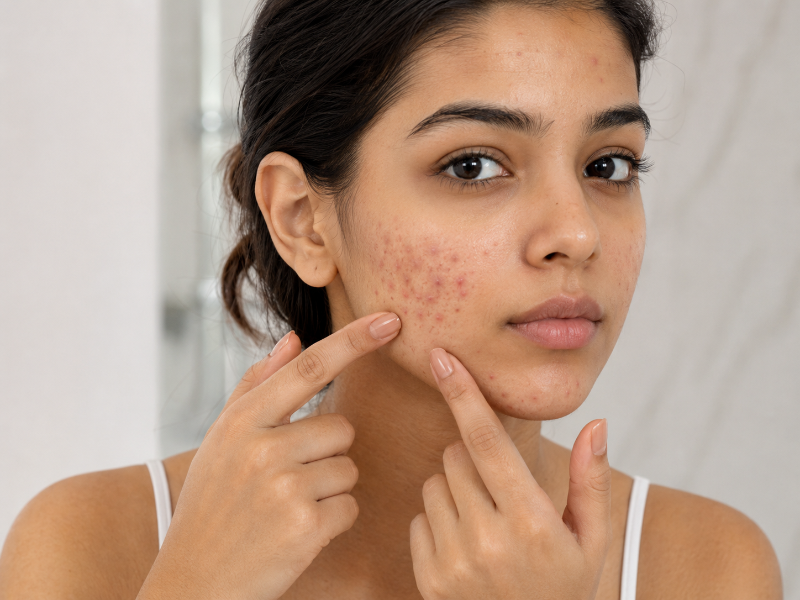
Not every pimple is the same. Acne can appear in different forms, from blackheads and whiteheads to papules, pustules, nodules, and cysts. These different types of acne can vary in appearance, severity, and treatment needs, so identifying what you're dealing with is an important first step. Understanding your acne type can help you choose the right treatment approach, reduce the risk of long-term scarring, and work towards healthier-looking skin.
Quick Answer
Acne is broadly classified into non-inflammatory acne (blackheads and whiteheads) and inflammatory acne (papules, pustules, nodules, and cysts). Identifying the correct acne type is important because each responds differently to treatment, and severe acne may require professional dermatological care.
Key Takeaways
- There are several different types of acne.
- Not all acne types require the same treatment.
- Inflammatory acne has a higher risk of scarring.
- Early diagnosis improves treatment outcomes.
- Severe acne should always be evaluated by a dermatologist.
What Is Acne?
Acne is one of the most common skin conditions, affecting teenagers (check out Teen Acne Guide) and adults alike. It develops when excess oil, dead skin cells, and bacteria block hair follicles, leading to different types of breakouts on the face and body.
While many people think every breakout is the same, there are actually several different types of acne, each with its own appearance, severity, and treatment needs. Knowing what type of acne you have can help you choose the right treatment and avoid unnecessary scarring.
How Is Acne Classified?
Acne is classified into two main categories:
Non-Inflammatory Acne | Inflammatory Acne |
Whiteheads (Closed Comedones) | Papules |
Blackheads (Open Comedones) | Pustules |
Nodules | |
Cystic Acne |
Non-inflammatory acne involves blocked pores without significant inflammation, while inflammatory acne develops when bacteria and the body's immune response trigger redness, swelling, and pain.The more inflammatory the type, the more clinical the intervention needs to be.
Non-Inflammatory Acne
Whiteheads (Closed Comedones)
Whiteheads are small white or flesh-coloured bumps that develop when a pore becomes blocked and remains closed beneath the skin's surface. They are among the mildest types of acne on the face and usually appear on the forehead, cheeks, chin, and nose, responding well to regular cleansing, non-comedogenic skincare, and gentle exfoliation. They don't cause inflammation on their own, but picking them creates exactly the inflammatory environment that leads to scarring.
Appearance
- Small white bumps
- Closed pores
- No redness
Common Causes
- Excess oil production
- Dead skin cells
- Clogged pores
Blackheads (Open Comedones)
Blackheads form when a clogged pore remains open. The dark colour is not dirt, it develops when the material inside the pore reacts with oxygen. Blackheads commonly appear on the nose, forehead, chin, and other oil-prone areas and often improve with regular cleansing and treatments that help keep pores clear. Homecare kits formulated for specific skin types and concerns like those prescribed at VCare Skin Clinic after consultation make a measurable difference at this stage.
Feature | Blackheads | Whiteheads |
Appearance | Dark open spots | White or flesh-coloured bumps |
Pore Status | Open | Closed |
Colour | Black | White or skin coloured |
Inflammation | Low to No | Mild |
Treatment | Pore-clearing treatments | Gentle exfoliation and pore-clearing care |
Inflammatory Acne
Inflammatory acne develops when clogged pores become infected and inflamed. These acne types have a higher chance of leaving scars if left untreated.
Papules
Papules are small red bumps that develop when blocked pores become inflamed. Unlike whiteheads, they do not contain visible pus.Papules often improve with targeted acne treatments prescribed according to your skin condition.
Appearance
- Small red bumps
- Tender to touch
- No white center
Risk of Scarring
Low if treated early.
Pustules
Pustules are what most people recognize as a typical pimple. They contain white or yellow pus surrounded by red, inflamed skin.Although tempting, pustules should never be popped. Proper acne treatment helps reduce inflammation while lowering the risk of post-acne marks.
Appearance
- Red inflamed base
- Tenderness
- Visible pus
- Swelling
Risk of Scarring
Moderate to high if squeezed.
Nodules
Nodules are large, hard, painful lumps that develop deep beneath the skin. Unlike pustules, they do not form a visible head, often persist for several weeks and usually require professional treatment because topical products often cannot reach the deeper layers of the skin where the inflammation occurs.
Appearance
- Large painful lump
- Deep beneath the skin
- No visible pus
Risk of Scarring
High.
Cystic Acne
Cystic acne is the most severe form of acne. It consists of large, painful, pus-filled lumps that develop deep within the skin. It carries the highest risk of permanent acne scars and should be treated as early as possible, evaluated by a dermatologist.
Appearance
- Large swollen lumps
- Soft and painful
- Filled with pus
Risk of Scarring
Very high.
Body Acne
Acne doesn't only affect the face. Body acne commonly develops on the back, shoulders, chest, and upper arms where oil glands are also active. Back acne treatment depends on the type and severity of the acne and may require professional evaluation if it becomes painful or widespread.
Acne Vulgaris
Acne vulgaris is the umbrella medical term for the most common form of acne which encompasses whiteheads, blackheads, papules, and pustules occurring together. It involves increased sebum production, abnormal shedding of dead skin cells, proliferation of Cutibacterium acnes bacteria, and inflammation, resulting in redness, swelling, and visible skin lesions. Most teenage and early adult acne falls into this category. Acne vulgaris is highly treatable when the right type-specific approach is applied. Explore Best Acne Treatments for Clear Skin to understand what you could be suggested.
Which Acne Type Is Most Likely to Leave Scars?
Acne scars are a separate concern from active acne and they need separate Acne Scar Treatment. Every type of acne can leave a mark, but inflammatory types leave deeper ones. Post-inflammatory hyperpigmentation (flat dark marks) is the most common, responding well to peels, brightening treatments, and laser therapy. Pitted or textural scarring from nodular and cystic acne needs more intensive resurfacing such as microneedling, PRP, and laser treatments over a structured course of sessions.
Can You Have Multiple Types of Acne at the Same Time?
Yes. It's common to have more than one acne type at once. For example, you may have blackheads on your nose, whiteheads on your forehead, and inflamed papules or pustules on your cheeks. Since each breakout behaves differently, treatment often needs to be tailored rather than using a single solution
How Dermatologists Diagnose Acne
To diagnose acne accurately, a dermatologist at a trusted skin clinc like VCare conducts a thorough physical examination to analyze your skin texture and assign a precise severity grading based on your specific lesion type. The expert will simultaneously review your medical history, lifestyle factors, and genetics to isolate your unique triggers and design a customized clinical plan, such as a targeted Acne Treatment for Oily Skin to balance sebum production. In cases where breakouts are exceptionally stubborn or accompanied by signs of hormonal imbalances, your specialist may recommend additional evaluation, such as lab tests, to address any underlying internal causes.
The Bottom Line
The types of acne vary enormously in cause, depth, and what they require. Getting a proper skin evaluation at VCare Skin Clinic, where the type, severity, and underlying cause are assessed before any treatment is recommended, is what turns that starting point into a plan that actually works.
Visit your nearest VCare Skin Clinic for a detailed skin assessment and a personalised acne treatment plan based on your specific type of acne, skin condition, and lifestyle.
COMMONLY ASKED ABOUT TYPES OF ACNE
What are the different types of acne?
The main acne types are whiteheads, blackheads, papules, pustules, nodules, and cystic acne. They are broadly classified into non-inflammatory and inflammatory acne.
How can I identify my acne type?
Look at the appearance of the breakout. Whiteheads and blackheads are non-inflammatory, while red, swollen, painful, or pus-filled bumps are inflammatory acne. A dermatologist can confirm your acne type.
Which acne type is the most painful?
Nodules and cystic acne are usually the most painful because they develop deep beneath the skin.
What is the difference between papules and pustules?
Papules are small, red bumps without pus, while pustules contain a visible white or yellow centre filled with pus.
Can blackheads become pimples?
Yes. If a clogged pore becomes inflamed or infected, a blackhead can develop into an inflammatory pimple.
Which acne scars the most?
Nodules and cystic acne carry the highest risk of permanent acne scars because they affect deeper layers of the skin.
Is fungal acne the same as acne vulgaris?
No. Fungal acne is caused by yeast rather than clogged pores and acne-causing bacteria.
Are whiteheads better than blackheads?
Neither is better or worse. Both are mild, non-inflammatory forms of acne that respond well to early treatment.
Which acne type is most common?
Whiteheads and blackheads are among the most common forms of acne.


 info@vcaretrichology.com
 +91 709 2525 252
 View All Locations


