
How to Know Your Skin Type: A Complete Guide
Published on 2026-10-06 | By Admin
Know Your Skin Type Before Choosing Skincare Products
Have you ever wondered why a skincare product works well for someone else but doesn't suit your skin? The answer often comes down to your skin type. Understanding how to know your skin type or how to identify skin type can help you make better skincare choices. Whether you have normal, oily, dry, combination, or sensitive skin, knowing your skin type helps you choose the right cleansers, moisturisers, sunscreens, and treatments. Using products that don't match your skin's needs can lead to excess oil, dryness, breakouts, or irritation.

It's also important to understand that skin type and skin condition are not the same. In this guide, you'll learn what skin type is, explore the five main skin types, understand how your skin type can change over time, and discover how to choose skincare that works best for your skin.
What Is Skin Type?
Skin type describes the natural characteristics of your skin, including its oil production, moisture balance, and sensitivity or reactivity. Knowing your skin type can help you choose suitable skincare products and build a routine that works with your skin’s needs.
Skin can also be classified by its response to sun exposure using the Fitzpatrick Skin Phototype system. These two classifications look at different characteristics of the skin.
Cosmetic Skin Types: Oil & Reactivity
Cosmetic skin types are generally classified according to factors such as sebum production, moisture balance, and how easily the skin becomes irritated.
Skin Type | Common Characteristics |
Normal | Balanced oil and moisture, generally smooth texture, fewer breakouts |
Dry | Lower sebum production: may feel tight, rough, or flaky |
Oily | Higher sebum production, visible shine, and greater tendency toward clogged pores and acne |
Combination | Usually oilier in the T-zone such as forehead, nose and chin with normal or dried cheeks |
Sensitive | May react more easily to skincare products or environmental factors with redness, stinging, or irritation |
Fitzpatrick Skin Phototypes: Sun Response
The Fitzpatrick Skin Phototype classification describes how skin typically responds to ultraviolet (UV) exposure, particularly its tendency to burn or tan.
Phototype | Typical Sun Response |
Type I | Very light skin; typically burns and does not tan |
Type II | Light skin; burns easily and tans minimally |
Type III | Light to light-brown skin; may burn and gradually develops a tan |
Type IV | Moderate-brown skin; burns less readily and tans well |
Type V | Dark-brown skin; rarely burns and tans easily |
Type VI | Deeply pigmented dark-brown to black skin; very rarely burns |
Skin Type vs. Skin Condition
Your skin type describes characteristics such as oiliness, dryness, or sensitivity, while a skin condition refers to a particular concern that may develop or change over time.
For example, a person with oily skin may experience acne, while someone with dry skin may also have dehydration or irritation. Understanding both your underlying skin type and your current skin concerns can help guide more appropriate skincare choices.
Why Is Knowing Your Skin Type Important?
Knowing your skin type allows you to build a skincare routine that works with your skin instead of against it. Since every skin type has different needs, using suitable products can help maintain your skin's natural balance and improve overall skin health.
Choose the Right Skincare Products
No single product works for everyone. Oily skin often benefits from lightweight, oil-balancing products, while dry skin requires richer, hydrating formulations. Choosing products according to your skin type helps maximise their effectiveness.
Help Prevent Common Skin Concerns
Using products that aren't suitable for your skin may contribute to clogged pores, irritation, excessive dryness, or breakouts. Understanding your skin type helps you avoid products that may worsen these concerns.
Build an Effective Skincare Routine
Once you know your skin type, selecting the right cleanser, moisturiser, sunscreen, and treatment products becomes much easier. This allows you to build a simple, consistent routine tailored to your skin's needs.
Support Your Skin Barrier
A healthy skin barrier helps retain moisture and protects your skin from environmental damage. Using products suited to your skin type supports this natural barrier and promotes healthier-looking skin.
Understanding your skin type is the foundation of a skincare routine that delivers long-term results rather than relying on trial and error.
The 5 Main Skin Types Explained
Everyone's skin is unique, but it generally falls into one of five main skin types: normal, oily, dry, combination, or sensitive. Understanding your skin type makes it easier to choose products and build a skincare routine that suits your skin's needs. Here's how each skin type differs.
If you're wondering how many types of skin there are, the five commonly discussed cosmetic skin types are normal, oily, dry, combination, and sensitive skin. Understanding these different skin types is the first step towards choosing skincare according to skin type.
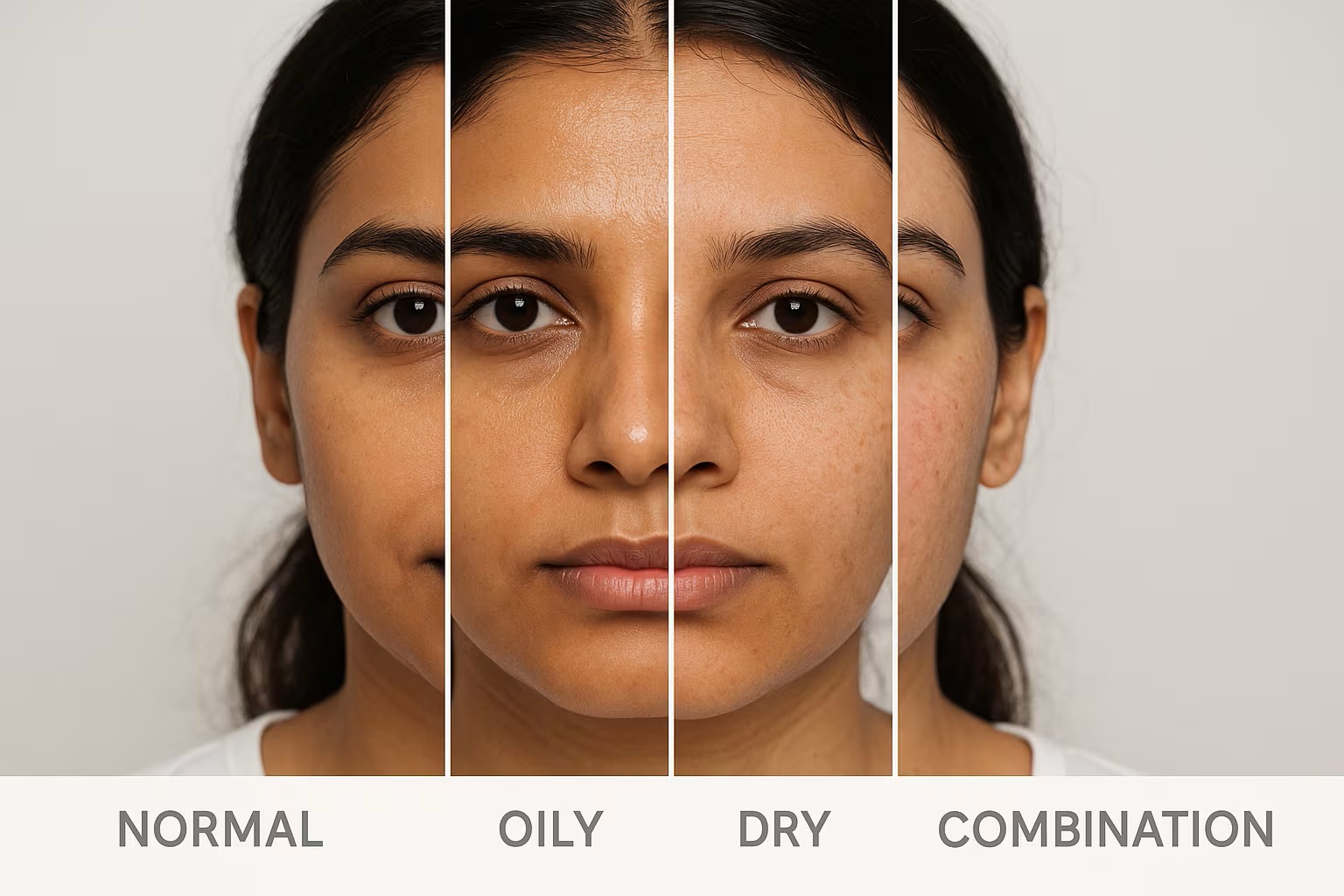
1. Normal Skin
Normal skin is well-balanced, with the right amount of natural oil to keep it comfortable without feeling too oily or dry. It usually has a smooth texture, an even complexion, small pores, and is less prone to frequent breakouts.
Maintain normal skin with gentle, hydrating ingredients like Hyaluronic Acid, Glycerin, Ceramides, and Vitamin C. Cleanse twice daily, moisturise regularly, apply sunscreen every morning, and avoid over-exfoliating to protect your skin's natural balance.
2. Oily Skin
Oily skin produces excess sebum, making the face appear shiny, especially in the T-zone (forehead, nose, and chin). It is also more prone to enlarged pores, blackheads, whiteheads, and acne.
Ingredients like Niacinamide, Salicylic Acid, and clay-based formulations can help manage excess oil. Wash your face twice daily with a gentle cleanser, use a lightweight non-comedogenic moisturiser, avoid overwashing, and apply an oil-free sunscreen every day.
3. Dry Skin
Dry skin produces less natural oil, making it feel tight, rough, or flaky. It may also appear dull and become more sensitive due to a weakened skin barrier.
Hydrating ingredients like Hyaluronic Acid, Ceramides, Glycerin, and Squalane can help replenish moisture. Use a gentle cleanser, apply a rich moisturiser while your skin is slightly damp, avoid long hot showers, and wear sunscreen daily to protect your skin.
4. Combination Skin
Combination skin has both oily and dry areas, with an oily T-zone (forehead, nose, and chin) and normal or dry cheeks. This skin type needs a balanced routine to manage excess oil while maintaining hydration.
Ingredients like Niacinamide, Hyaluronic Acid, and Ceramides can help balance the skin. Use a gentle cleanser, apply a lightweight moisturiser, adjust products for different areas if needed, and consider multi-masking to address specific skin concerns.
5. Sensitive Skin
Sensitive skin reacts easily to certain skincare products, weather, or environmental factors, often causing redness, itching, burning, or irritation. It can occur alongside any skin type, including oily, dry, or combination skin.
Barrier-supporting ingredients like Ceramides, Glycerin, Panthenol, and Colloidal Oatmeal can help soothe sensitive skin. Choose fragrance-free products, patch-test new skincare, keep your routine simple, and apply sunscreen daily to help protect your skin.
Can Your Skin Type Change?
Although genetics largely determine your skin type, it can change over time due to various internal and external factors.
Common factors that influence your skin include:
Age: Oil production naturally decreases, making the skin drier.
Hormonal Changes: Puberty, pregnancy, menstruation, and menopause can affect sebum production.
Climate: Hot weather may increase oiliness, while cold weather can make skin drier.
Seasonal Changes: Your skin's needs often vary between summer and winter.
Lifestyle: Stress, poor sleep, dehydration, and diet can impact overall skin health.
Medications: Some medicines may increase dryness, oiliness, or skin sensitivity.
Since your skin's needs can change over time, it's a good idea to review your skincare routine periodically and choose products that match your skin's current condition.
Common Skincare Mistakes for Each Skin Type
Even if you know your skin type, using the wrong products or habits can affect your skin's health. Avoid these common mistakes to improve your skincare routine.
Skin Type | Common Mistake | What to Do Instead |
Normal Skin | Skipping sunscreen because your skin has no visible concerns | Apply a broad-spectrum sunscreen every day to protect against UV damage. |
Oily Skin | Overwashing or using harsh cleansers to remove oil | Cleanse twice daily with a gentle cleanser and use lightweight, non-comedogenic products. |
Dry Skin | Skipping moisturiser or using products that strip natural oils | Use a hydrating cleanser and apply a moisturiser regularly to support the skin barrier. |
Combination Skin | Using the same products on the entire face | Balance your routine by choosing products that address both oily and dry areas. |
Sensitive Skin | Frequently trying new skincare products or using strong active ingredients | Keep your routine simple, patch-test new products, and choose fragrance-free formulations. |
Small, consistent changes often deliver better results than constantly switching skincare products.
When Should You Get a Professional Skin Analysis?
While understanding your skin type is a great starting point, some concerns require expert evaluation. A professional skin analysis can accurately assess your skin's oil levels, hydration, sensitivity, pigmentation, pores, and overall condition.
Consider consulting a dermatologist if you have:
- Persistent acne or frequent breakouts
- Pigmentation or uneven skin tone
- Excessive oiliness or dryness
- Redness, irritation, or sensitivity
- Rosacea or eczema symptoms
- Difficulty identifying your skin type
- Skin concerns that don't improve with skincare products
Based on the assessment, a dermatologist can recommend a personalised skincare routine and suitable treatments for your skin's unique needs.
Go Beyond Guesswork with VCare’s AI-Powered Skin Analysis
At VCare, we believe the right skincare approach begins with understanding your skin better. That’s why we use an AI-powered Skin Analyzer as part of our detailed skin assessment.
Combining artificial intelligence with multi-spectral skin imaging, the analyzer provides an in-depth view of different skin parameters that may not always be easy to understand through visual examination alone.
It helps our dermatologists assess:
- Skin type and overall condition
- Oil and moisture levels
- Pigmentation and uneven skin tone
- Pores and skin texture
- Acne-related concerns
- Visible signs of skin ageing
- Other relevant skin parameters
These insights, together with a dermatologist’s evaluation, help build a more personalised understanding of your skin and guide suitable skincare and treatment recommendations.
Because when you understand what your skin actually needs, choosing the right care becomes much easier.
Final Thoughts
Knowing your skin type is the foundation of healthy skin. Whether you have normal, oily, dry, combination, or sensitive skin, understanding its characteristics helps you choose products that work best for your skin and avoid unnecessary trial and error.
Keep in mind that your skin's needs can change due to age, hormones, climate, or lifestyle. Reviewing your skincare routine from time to time can help ensure it continues to support your skin effectively.
If you're unsure about your skin type or have ongoing concerns like acne, pigmentation, or irritation, consulting a dermatologist can provide a clearer understanding of your skin and the most suitable treatment options.
At VCare Hair & Skin Clinics, our dermatologists perform comprehensive skin analyses to identify your skin type, evaluate underlying concerns, and recommend personalised skincare solutions tailored to your individual needs.
Frequently Asked Questions
1. How can I know my skin type at home?
You can get a general idea of your skin type by observing how your skin feels after cleansing. Oily skin appears shiny, dry skin feels tight or flaky, combination skin has an oily T-zone with drier cheeks, while normal skin feels balanced. A professional skin analysis provides the most accurate assessment.
2. What are the five main skin types?
The five main skin types are normal, oily, dry, combination, and sensitive skin. Each skin type has different characteristics and requires a skincare routine suited to its needs.
3. Can my skin type change with age?
Yes. Although genetics largely determine your skin type, factors such as ageing, hormonal changes, climate, lifestyle, and certain medications can affect how your skin behaves over time.
4. Is dehydrated skin the same as dry skin?
No. Dry skin is a skin type that naturally produces less oil, while dehydrated skin is a temporary condition caused by a lack of water. Even oily skin can become dehydrated.
5. Which skincare products are best for oily skin?
Oily skin generally benefits from gentle cleansers, lightweight non-comedogenic moisturisers, and products containing ingredients such as niacinamide or salicylic acid. A dermatologist can recommend products based on your skin's needs.
6. Can one person have two skin types?
Yes. Many people have combination skin, where the T-zone is oily while the cheeks are normal or dry. It's also possible to have a skin type along with a skin condition, such as oily skin with acne.
7. Does weather affect skin type?
Weather doesn't usually change your natural skin type, but it can affect how your skin behaves. Hot weather may increase oiliness, while cold, dry weather can make the skin feel drier.
8. Should I consult a dermatologist if I'm unsure about my skin type?
Yes. If you're unsure about your skin type or have persistent concerns such as acne, pigmentation, redness, or sensitivity, a dermatologist can perform a professional skin analysis and recommend a personalised skincare routine.
9. How to identify skin type?
To understand how to identify skin type, observe your skin's oiliness, dryness, sensitivity, and how different areas of your face behave after cleansing. A professional skin analysis can provide a more detailed assessment.
10. How to know skin type?
If you're wondering how to know skin type, check whether your skin generally feels balanced, oily, dry, sensitive, or has a combination of oily and dry areas. These characteristics can help indicate your skin type.
11. How to check skin type at home?
One simple way to understand how to check skin type is to cleanse your face gently and observe how it feels after some time without immediately applying skincare products. Oiliness, tightness, or differences between facial areas can provide useful clues.
12. How to test skin type?
If you want to know how to test skin type, you can begin with an at-home observation test. For a more detailed evaluation, a dermatologist or professional skin analysis can assess factors such as oil, moisture, pores, and sensitivity.
13. What is normal skin type?
If you're wondering what is normal skin type, it generally refers to skin with a relatively balanced level of oil and moisture. It usually feels comfortable, has a smooth texture, and is less prone to excessive dryness or oiliness.
14. Which skin type is best?
There is no single answer to which skin type is best. Every skin type has different characteristics and care requirements. The goal is to understand your skin and choose products and routines that suit its needs.
15. How many types of skin layer are there?
If you're searching how many types of skin layer there are, human skin has three main layers: the epidermis, dermis, and hypodermis (subcutaneous layer). Skin layers are different from skin types, which describe characteristics such as oiliness, dryness, and sensitivity.







 info@vcaretrichology.com
 +91 709 2525 252
 View All Locations


