

10 Common Acne Scar Myths vs Facts You Should Know
Published on 2026-10-27 | By Admin
Think You Know Acne Scars? You Might Be Surprised
Acne scars are one of the most misunderstood skin concerns. From DIY remedies to social media skincare hacks, there's no shortage of advice but not all of it is accurate.
Believing common acne scar myths can lead to delayed treatment, unrealistic expectations, and skincare habits that may actually worsen your skin.
In this guide, we’ll separate myths from facts so you can better understand what really causes acne scars, what helps prevent them, and when professional care may be worth considering.
What Is an Acne Scar?
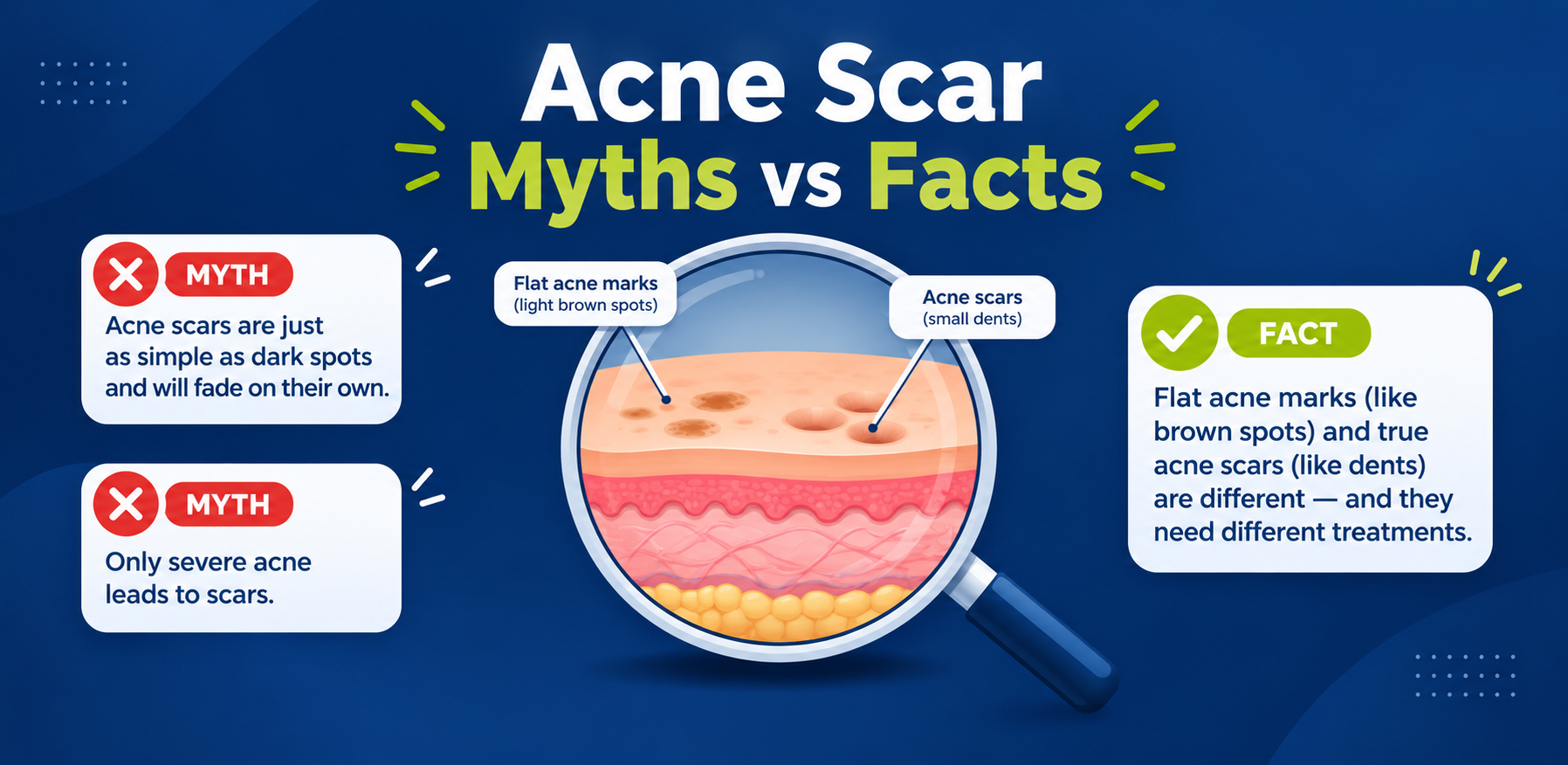
An acne scar is a permanent change in the skin that develops when an inflamed acne lesion damages the deeper layers of the skin during healing. As your skin repairs itself, it produces collagen to rebuild the damaged tissue. If too little collagen is produced, depressed scars can form. If too much collagen is produced, raised scars may develop.
It's important to remember that not all acne leaves a scar. Many breakouts heal completely or leave behind temporary dark spots, often called acne marks, which are different from true acne scars.
Acne scars can vary in appearance and severity depending on factors such as the type of acne, the extent of inflammation, your skin's healing response, and whether pimples have been picked or squeezed. Understanding these differences is the first step towards making informed skincare and treatment decisions.
Although acne scars are common, there are countless misconceptions about how they develop, whether they disappear naturally, and what actually helps improve them. These myths often influence the skincare choices people make, which is why separating facts from fiction is so important.
Why Do Acne Scar Myths Matter?
When it comes to acne scars, misinformation can be just as frustrating as the scars themselves.
Many people assume scars will disappear on their own, rely solely on home remedies, or believe every pimple leaves a permanent mark. These misconceptions often delay proper care and can make scar management more challenging over time.
They can also lead people to spend time and money on treatments that may not be suitable for their type of acne scar.
Understanding the facts helps you:
- Make informed skincare decisions
- Set realistic treatment expectations
- Reduce the risk of future scarring
- Know when to seek professional advice
Let's look at some of the most common myths about acne scars and the facts behind them.
Myth 1: Every Pimple Leaves a Scar
Fact: Not every pimple results in permanent scarring.
Whether acne leaves a scar depends on factors such as the severity of inflammation, your skin's healing response, genetics, and whether the pimple has been picked or squeezed.
Many mild breakouts heal without leaving permanent scars, while deeper or inflamed acne has a greater chance of damaging collagen and causing long-term skin texture changes.
Myth 2: Acne Scars and Acne Marks Are the Same
Fact: They're two different skin concerns.
This is one of the biggest misconceptions.
Acne marks are flat areas of discoloration that appear after acne heals and often fade gradually over time.
Acne scars, on the other hand, are permanent changes in the skin's texture caused by collagen damage during the healing process. They usually require professional evaluation to improve their appearance.
Myth 3: Acne Scars Fade Completely on Their Own
Fact: It depends on the type of scar.
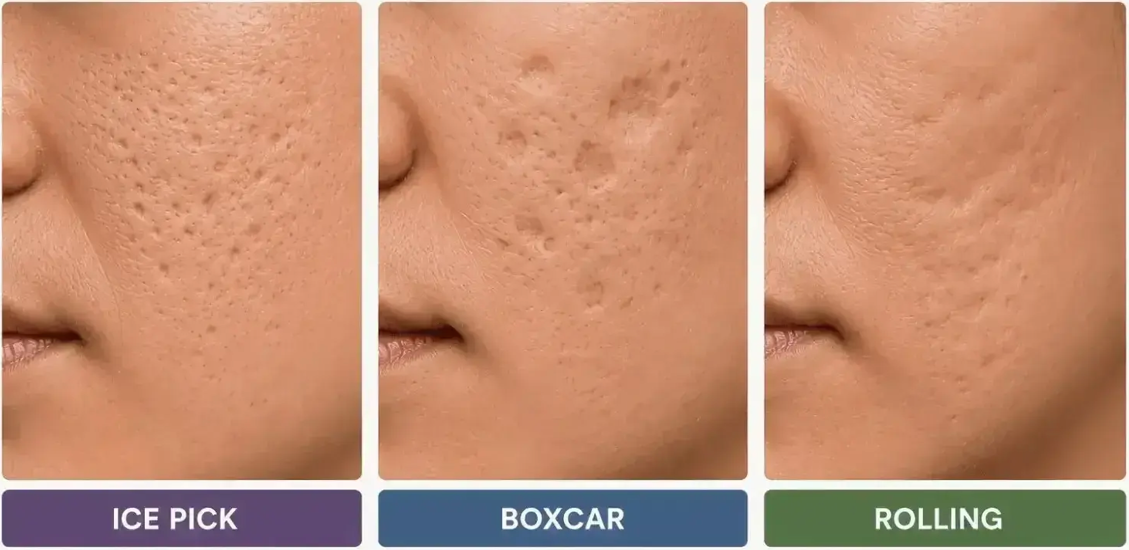
Post-acne marks may gradually become lighter, but true acne scars such as ice pick, boxcar, or rolling scars typically do not disappear completely without professional treatment.
The sooner acne is managed, the lower the risk of permanent scarring.
Myth 4: Picking Pimples Doesn't Affect Scarring
Fact: Picking pimples can increase the risk of acne scars.
Squeezing or picking acne can push inflammation deeper into the skin, damage healthy tissue, and interfere with the natural healing process.
Avoiding this habit is one of the simplest ways to reduce the risk of long-term scarring.
Myth 5: Only Severe Acne Causes Scars
Fact: Even mild acne can leave scars.
Although cystic acne carries a higher risk, repeated inflammation or frequent picking of mild breakouts can also result in permanent scars.
Early acne management is important regardless of how mild your breakouts may seem.
Myth 6: Oily Skin Doesn't Get Acne Scars
Fact: Acne scars can develop on any skin type.
Many people believe that only dry or sensitive skin is prone to scarring. In reality, acne scars can affect people with oily, combination, or dry skin alike.
Scarring depends more on the severity of inflammation, your skin's healing response, and how acne is managed than on your skin type.
Myth 7: Sun Exposure Helps Acne Scars Fade
Fact: Sun exposure can make acne marks appear darker.
Spending time in the sun without protection doesn't fade acne scars it can actually make post-acne pigmentation more noticeable and slow down the skin's natural healing process.
Using a broad-spectrum sunscreen every day helps protect your skin and supports a more even-looking complexion during acne scar management.
Myth 8: Once Acne Stops, New Scars Can't Form
Fact: New breakouts can still lead to new scars.
Even if you've treated your existing acne scars, future breakouts can leave behind additional scars if they aren't managed properly.
Keeping active acne under control is just as important as treating existing scars to reduce the risk of further skin damage.
Myth 9: Homecare Isn't Important for Acne-Prone Skin
Fact: A consistent skincare routine supports healthier skin.
Professional treatments play an important role in acne scar management, but your daily skincare routine also matters.
A suitable homecare routine may help:
- Keep the skin clean and balanced
- Support the skin barrier
- Reduce irritation
- Minimise factors that contribute to future breakouts
Depending on your skin condition, your dermatologist may also recommend products such as the VCare Scariderm Homecare Kit as part of your personalised acne scar management routine.
Myth 10: Everyone Develops the Same Type of Acne Scar
Fact: Acne scars vary from person to person.
No two people experience acne scars in exactly the same way.
Some individuals develop ice pick scars, while others may have boxcar scars, rolling scars, hypertrophic scars, or a combination of different scar types.
Because every scar type responds differently, identifying the type of scar is an important step before choosing the most appropriate treatment approach.
How to Reduce the Risk of Acne Scars
While not every acne scar can be prevented, adopting the right skincare habits early can significantly lower your risk of long-term scarring.
Treat Acne Early
Don't wait for acne to become severe. Managing breakouts in their early stages can help minimise inflammation and reduce the chances of permanent skin damage.
Avoid Picking or Squeezing Pimples
It may be tempting, but picking acne can push bacteria and inflammation deeper into the skin, increasing the likelihood of scars.
Follow a Consistent Skincare Routine
Use gentle, non-comedogenic skincare products that suit your skin type. Cleansing, moisturising, and protecting your skin regularly can help support a healthy skin barrier.
Wear Sunscreen Every Day
Daily sun protection helps prevent post-acne marks from becoming darker and supports a more even-looking skin tone during the healing process.
When Should You Seek Professional Help for Acne Scars?
While some post-acne marks may fade with time, persistent acne scars often benefit from professional evaluation. Consider consulting a skin expert if you:
- Notice pits, dents, or uneven skin texture after acne heals
- Continue developing new scars after recurring breakouts
- Haven't seen improvement despite following a consistent homecare routine
- Feel that acne or acne scars are affecting your confidence
- Experience frequent cystic or inflammatory acne
Seeking professional advice early can help manage active acne, reduce the risk of future scarring, and guide you towards the most appropriate approach for your skin concerns.
Final Takeaway
Acne scars are surrounded by myths, but understanding the facts can help you make better decisions for your skin. Not every pimple leaves a scar, not every scar fades on its own, and no single solution works for everyone.
The key to reducing the risk of acne scars is early acne management, avoiding habits like picking pimples, following a consistent skincare routine, and seeking professional advice when needed. The sooner you understand your skin, the better your chances of maintaining a smoother, healthier-looking complexion.
If you're unsure whether you're dealing with acne marks or true acne scars, the skin experts at VCare can help assess your skin, identify the type of scarring, and recommend a personalised approach based on your individual skin concerns.
Frequently Asked Questions
1. Do all pimples leave acne scars?
No. Not every pimple causes a scar. The risk depends on the severity of inflammation, your skin's healing response, and whether the pimple is picked or squeezed.
2. What's the difference between acne marks and acne scars?
Acne marks are temporary areas of discoloration that may fade over time, while acne scars are permanent changes in skin texture caused by collagen damage.
3. Can mild acne cause scars?
Yes. Even mild acne can leave scars, especially if breakouts are repeatedly picked or left untreated.
4. Does picking pimples increase scarring?
Yes. Picking or squeezing pimples can worsen inflammation, damage the skin, and increase the likelihood of permanent scarring.
5. Can sunlight worsen acne scars?
Yes. UV exposure can darken post-acne marks and make them more noticeable. Wearing sunscreen daily helps protect your skin and supports a more even complexion.
6. Can homecare help support acne-prone skin?
Yes. A consistent skincare routine, along with dermatologist-recommended products such as the VCare Scariderm Homecare Kit (when appropriate), can help maintain skin health and support acne scar management.
7. When should I consult a skin expert?
If your acne is persistent, recurring, or starting to leave marks or changes in skin texture, it's a good idea to consult a dermatologist early. Timely treatment can help reduce the risk of long-term scarring.


 info@vcaretrichology.com
 +91 709 2525 252
 View All Locations


