

Can PRP Help Hair Thinning? Complete Guide for Men and Women
Published on 2026-08-15 | By Admin
Yes, PRP (Platelet-Rich Plasma) treatment may help improve hair thinning by delivering concentrated growth factors directly to the scalp. These growth factors support weakened hair follicles and promote healthier hair growth cycles.
PRP is often recommended for individuals experiencing early hair loss, diffuse thinning, reduced hair density, or excessive hair shedding. While PRP does not create new hair follicles, it aims to strengthen existing follicles that are still active, helping improve hair thickness and overall hair health over time.
What Is Hair Thinning?
Hair thinning refers to a gradual reduction in hair density, volume, or thickness. Unlike complete baldness, thinning hair often develops slowly and may initially appear as increased hair shedding, a widening part line, reduced ponytail volume, or visible scalp through the hair.
Hair thinning can affect both men and women and may occur across the entire scalp (diffuse thinning) or in specific areas such as the crown, temples, or hairline.
Because thinning hair often develops gradually, many people do not notice the changes until a significant reduction in density has already occurred. Identifying and addressing the condition early may help improve treatment outcomes.
What Causes Hair Thinning?
Hair thinning can occur due to a combination of genetic, hormonal, environmental, and lifestyle factors.
Some of the most common causes include:
- Genetic hair loss
- Hormonal fluctuations
- Stress-related shedding
- Nutritional deficiencies
- Scalp inflammation
- Aging
- Medical conditions
- Post-pregnancy hair loss
- Environmental factors
- Pollution
- UV exposure
- Frequent use of harsh chemical hair treatments
In many cases, more than one factor contributes to hair thinning simultaneously. Understanding the underlying cause is often essential when choosing the most appropriate hair density treatment.
How Does PRP Work for Hair Thinning?
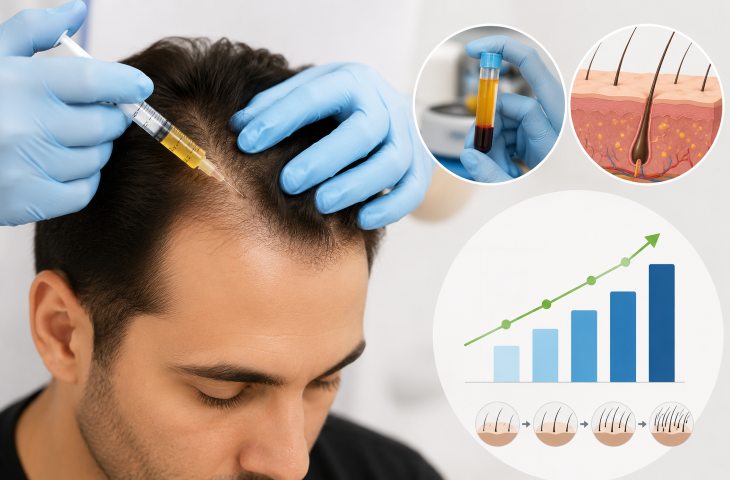
PRP for thinning hair works by using platelet-rich plasma prepared from a small sample of your own blood.
The blood is processed to concentrate platelets, which contain naturally occurring growth factors. These growth factors are then delivered into areas experiencing hair thinning through targeted scalp injections.
The treatment is designed to support:
- Hair follicle nourishment
- Scalp circulation
- Hair growth cycle activity
- Follicle strengthening
- Hair density improvement
Rather than replacing hair follicles, PRP aims to create a healthier scalp environment where existing follicles can function more effectively.
This is why PRP for early hair loss is often recommended before significant follicle damage or long-standing baldness develops.
Who Is a Good Candidate for PRP?
PRP tends to work best for individuals experiencing early-stage hair loss rather than advanced baldness.
You may be a suitable candidate if you are noticing:
- Mild to moderate hair thinning
- Diffuse thinning across the scalp
- Increased daily hair fall
- Reduced hair density
- Early signs of hereditary hair loss
- Gradual widening of the hair part
People with active hair follicles generally experience better outcomes compared to those with long-standing areas where follicles are no longer functioning.
A professional scalp assessment can help determine whether PRP is appropriate based on your hair loss pattern, follicle activity, scalp health, and overall treatment goals.
PRP for Hair Thinning in Women
Hair thinning in women often presents differently from male pattern hair loss. Instead of a receding hairline, many women experience diffuse thinning across the top of the scalp or a gradually widening part line.
Factors such as hormonal changes, pregnancy, menopause, stress, nutritional deficiencies, and genetics can all contribute to female hair thinning.
PRP for women hair thinning is commonly recommended because it is a non-surgical treatment that focuses on supporting existing follicles and improving scalp health. Many women seek PRP as part of a broader hair restoration plan aimed at improving hair density, volume, and overall hair quality.
Early intervention is particularly important, as addressing thinning hair before significant density loss occurs may help support better long-term outcomes.
PRP for Hair Thinning in Men
Men often begin experiencing hair thinning through gradual recession at the temples, thinning at the crown, or a receding hairline.
In the early stages of male pattern hair loss, hair follicles typically become progressively weaker before eventually producing finer and shorter hairs.
PRP for early hair loss in men aims to support these weakened follicles before substantial follicular miniaturization occurs. By improving the scalp environment and delivering growth-factor-rich plasma directly to affected areas, PRP may help support stronger and healthier hair growth.
Men who begin treatment during the early stages of thinning often have a greater opportunity to preserve existing hair density.
Can PRP Prevent Hair Loss From Getting Worse?
PRP is often used as an early intervention strategy for individuals experiencing progressive hair thinning.
By supporting follicle health and strengthening weakened follicles, PRP may help slow the progression of certain types of hair loss. This is one reason why treatment is frequently recommended during the early stages rather than waiting until significant hair density has already been lost.
However, hair loss is influenced by multiple factors, including genetics, hormones, age, and overall health. Because of this, long-term management may sometimes involve a combination of treatments and ongoing maintenance.
What Are the Side Effects of PRP?
Because PRP uses a patient's own blood, the treatment is generally considered well-tolerated.
Some individuals may experience temporary effects immediately after the procedure, including:
- Mild scalp tenderness
- Temporary redness
- Minor swelling
- Slight sensitivity at injection sites
These effects are usually short-lived and typically resolve within a few days.
Most individuals can return to normal daily activities shortly after treatment, making PRP a convenient option for those seeking a minimally invasive hair density treatment.
Why Early Treatment Matters for Hair Thinning
One of the most important factors influencing PRP outcomes is the stage of hair loss at which treatment begins.
Hair follicles often undergo a gradual weakening process before they stop producing hair altogether. During this stage, follicles remain active but may produce thinner, weaker strands.
Treating hair thinning early may help:
- Support existing follicle health
- Improve hair density
- Reduce excessive shedding
- Preserve existing hair
- Slow progression of hair loss
This is why PRP for thinning hair is often recommended for individuals noticing the first signs of reduced density rather than waiting for advanced hair loss to develop.
Final Thoughts
PRP for hair thinning has become one of the most popular non-surgical options for individuals seeking to improve hair density, manage early hair loss, and support healthier hair growth. By delivering concentrated growth factors directly to the scalp, PRP focuses on strengthening existing follicles rather than masking the problem.
For both men and women experiencing mild hair loss, diffuse thinning, or reduced hair density, early intervention often offers the greatest opportunity for improvement. Understanding the cause of hair thinning and seeking timely treatment can play an important role in preserving hair health and supporting long-term results.
FAQs
Does PRP regrow lost hair?
PRP may help stimulate weakened or dormant follicles that are still active. However, it does not create new hair follicles where follicles have been permanently lost.
Is PRP painful?
Most individuals experience only mild discomfort during treatment. The procedure is generally well tolerated, and discomfort is usually temporary.
Can women undergo PRP treatment?
Yes. PRP for women hair thinning is commonly recommended for female pattern thinning, diffuse hair loss, and reduced hair density.
What makes VCare's PRP treatment different?
At VCare, PRP treatment is supported by personalised treatment planning, experienced specialists, advanced clinical protocols, and regular follow-up care.
How long do PRP results last?
Results vary among individuals. Maintenance sessions may be recommended periodically to help support long-term hair growth and density.
Is PRP effective for hereditary hair loss?
PRP may help support hair growth in individuals with early-stage hereditary hair loss when active follicles are still present.
What age is best for PRP?
There is no specific ideal age. However, individuals who begin treatment during the early stages of hair thinning often experience better outcomes than those with advanced hair loss.
Can PRP stop hair fall permanently?
PRP may help reduce excessive hair shedding, but hair loss is often influenced by ongoing genetic, hormonal, and lifestyle factors. Maintenance treatment may be required.
Does PRP work for bald patches?
PRP may help if active follicles are still present within the affected area. Long-standing bald patches with inactive follicles may require alternative treatment approaches.

 info@vcaretrichology.com
 +91 709 2525 252
 View All Locations


