

Photobiostimulation Therapy for Hair Growth: The Science Behind PBS Treatment
Published on 2026-10-17 | By Admin
Hair fall rarely starts with one dramatic moment. You may first notice more hair on your pillow, a widening part, a thinner-looking crown, or a ponytail that feels smaller than before.
With so many oils, serums, supplements, and hair treatments available today, it can be difficult to know which options actually have a scientific basis. Photobiostimulation Therapy for Hair Regrowth is one non-surgical approach that uses controlled light-based energy to support the hair and scalp environment.
But what exactly happens during PBS treatment? How does light interact with the scalp, and can it really support hair growth? Let's understand the science behind this technology and what you can realistically expect.
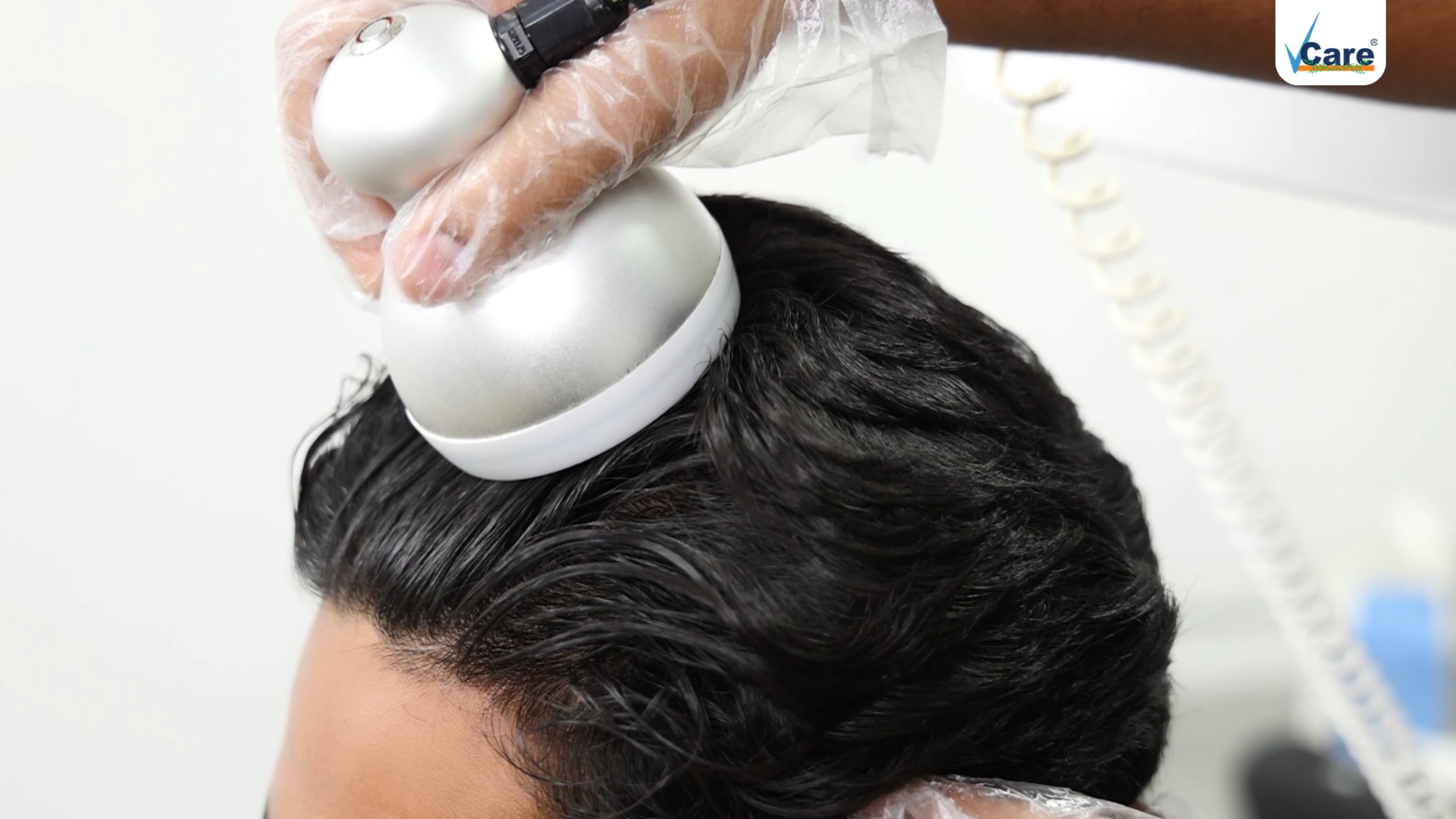
What Is Photobiostimulation Therapy?
Photobiostimulation Therapy is a non-invasive treatment approach that uses controlled light energy to interact with cells and support biological processes involved in tissue function. In hair care, it is commonly discussed as photobiomodulation or low-level light therapy (LLLT), particularly for pattern hair loss.
The idea isn't to “force” hair to grow overnight. Instead, specific wavelengths of light are thought to interact with cellular processes and signalling pathways that may support the function of hair follicles. Research on LLLT has found improvements in hair density compared with sham treatment in people with androgenetic alopecia, although results vary and treatment parameters matter.
At VCare, PBS Treatment uses a multi-energy approach that combines optical, biological, thermal, and electrical components as part of its clinical protocol.
This makes PBS different from a conventional hair oil or topical product. It is a technology-led, non-surgical approach performed under professional supervision.
The Science Behind PBS Hair Growth Technology
Photobiostimulation works by exposing tissue to controlled light energy, which can influence cellular signalling and energy-related processes. In photobiomodulation research, red and near-infrared light can be absorbed by cellular components such as cytochrome c oxidase in mitochondria, influencing ATP production, reactive oxygen species, calcium signalling, and downstream cellular pathways.
So, what does that mean for hair?
Hair follicles are living structures that continuously move through different stages of growth and rest. A healthy follicular environment is important for maintaining normal hair cycling.
Photobiomodulation is being studied for its potential to support this environment through cellular and signalling effects. Research suggests that LLLT may help improve hair density in androgenetic alopecia, but it should be viewed as a treatment option rather than a guaranteed solution for every type of hair loss.
A closer look at the cellular level
When appropriate light wavelengths reach target tissue, photons can interact with cellular chromophores. One proposed pathway involves mitochondrial cytochrome c oxidase, which may influence cellular energy production and signalling.
These effects may contribute to changes in cellular proliferation, inflammation-related signalling, and other processes involved in tissue health. However, the exact response depends on factors such as wavelength, energy dose, treatment duration, and the condition being treated.
That's why Hair Regrowth Technology isn't simply about using “more light.” The parameters and treatment protocol matter.
Understanding the Four-Energy Technology Behind PBS
VCare's PBS approach combines four types of energy—optical, biological, thermal, and electrical—to support the scalp and hair follicles as part of a structured treatment protocol. Each component has a different role within the treatment process.
Optical Energy
Optical energy uses controlled light wavelengths as part of the PBS protocol. Red and near-infrared light are the most commonly studied wavelengths in photobiomodulation for hair growth, while VCare's protocol also incorporates blue light.
The broader photobiomodulation literature suggests that light can interact with cellular components and influence signalling associated with cellular energy and tissue responses.
Within the VCare protocol, optical energy is used to support the scalp environment and follicular activity.
Biological Energy
The biological component of PBS involves the use of active ingredients and nano-based formulations within the treatment protocol.
VCare describes this component as incorporating nano actives such as nano sulphur, nano zinc, and nano silver to support targeted delivery to the scalp.
These ingredients are part of the VCare-specific PBS protocol. They should not be confused with the broader scientific evidence for photobiomodulation itself, which primarily relates to the effects of controlled light exposure.
Thermal Energy
Thermal energy uses controlled warming as part of the treatment process. Gentle heat can increase local blood flow and alter tissue conditions, while thermal stimulation is also used in various dermatological procedures.
In VCare's PBS protocol, a thermal rejuvenation gel is used as part of the treatment to create a supportive environment for the scalp and follicles.
Electrical Energy
Electrical energy is delivered through controlled microcurrent stimulation in the PBS protocol.
At VCare, this component is used to support scalp permeability and the absorption of treatment ingredients. It forms one part of the overall multi-step procedure rather than functioning as a standalone hair-growth treatment.
Together, these four components create the treatment framework used in PBS Hair Regrowth Therapy.
How Photobiostimulation Supports the Hair Growth Cycle
Hair does not grow continuously at the same rate; it naturally moves through three main phases—anagen, catagen, and telogen. Supporting a healthy scalp environment is important because changes in the hair cycle can contribute to visible shedding and thinning.
Anagen: The Growth Phase
Anagen is the active growth phase of the hair cycle. Hair follicles produce the hair shaft during this stage, and the phase can last for several years.
For people experiencing pattern hair loss, follicles may gradually produce thinner, shorter hairs. Photobiomodulation is being studied for its potential to support hair growth and density in androgenetic alopecia.
Catagen: The Transition Phase
Catagen is a short transition period when the follicle reduces its growth activity.
The hair stops actively growing as the follicle prepares to enter the resting stage.
Telogen: The Resting Phase
Telogen is the resting phase of the cycle. The old hair may eventually shed, allowing the follicle to begin another cycle.
This is why seeing some hair fall does not automatically mean the follicle has stopped functioning. Hair shedding can be influenced by many factors, and the underlying cause needs to be identified before choosing treatment.
Key Benefits of Photobiostimulation Therapy
Photobiostimulation offers a non-surgical approach that may support hair density and scalp health without the need for an invasive procedure. Research on LLLT has shown potential benefits particularly for androgenetic alopecia, while evidence for other hair-loss conditions remains more limited.
Potential advantages include:
Non-surgical: No surgical incisions or hair-transplant procedure are involved.
Comfortable: LLLT is generally considered painless and well tolerated.
No major downtime: People can generally return to normal activities after light-based treatment.
Supports hair quality: Treatment may help support existing hair and improve the appearance of density over time.
Suitable for men and women: Research on LLLT includes both male and female participants with pattern hair loss.
Technology-led approach: PBS combines multiple treatment components within a structured clinical protocol.
However, these benefits should not be interpreted as a promise that PBS will regrow hair in every person.
Current Research on Photobiostimulation for Hair Growth
Research suggests that photobiomodulation and low-level light therapy may support hair growth in some people with androgenetic alopecia (pattern hair lo ss). Clinical studies and systematic reviews have reported improvements in hair density, although outcomes can vary between individuals and treatment protocols.
Evidence for other types of hair loss is more limited. Therefore, the photobiostimulation component of PBS should be considered within a personalised hair fall treatment plan based on the underlying cause and condition of the hair follicles.
What Does the PBS Treatment Process Look Like?
PBS treatment begins with an assessment of your scalp and hair before the treatment protocol is planned. This helps determine whether the approach is appropriate for your concern and how the treatment should be customised.
At VCare, the PBS process includes six main steps:
Step 1: Scalp preparation
A scalp lotion is applied to prepare the scalp and support a comfortable treatment environment.
Step 2: Light-based therapy
Blue and red light are incorporated into the protocol to provide controlled optical stimulation.
Step 3: OxyJet application
An oxygen-based spray system is used to deliver a formulation containing selected botanical and active ingredients onto the scalp.
Step 4: Microcurrent stimulation
Controlled microcurrent stimulation forms part of the protocol to support product absorption and scalp treatment.
Step 5: Thermal and laser-based stimulation
Thermal rejuvenation and laser light are incorporated into the treatment according to the planned protocol.
Step 6: Conditioning
The session concludes with conditioning ingredients such as hydrolyzed proteins, argan oil, and aloe extract to support the hair shaft and scalp.
The exact protocol, treatment duration, and number of sessions should be determined by the treating professional rather than assumed to be the same for everyone.
Final Thoughts
Hair regrowth isn't about finding one magical treatment. It starts with understanding why your hair is thinning or shedding and then choosing an approach that matches the underlying concern.
Photobiostimulation Hair Therapy offers a non-surgical, technology-based option that uses controlled energy to support the scalp and hair-growth environment. If you're considering PBS hair regrowth treatment, a professional assessment can help determine whether it fits your hair and scalp needs and what kind of results you can realistically expect.
The goal isn't simply more hair. It's healthier hair growth supported by the right diagnosis, technology, and treatment plan.
Frequently Asked Questions
How long does a PBS session take?
The VCare protocol described for PBS typically takes around 120–140 minutes, depending on the treatment plan. Since protocols can vary according to individual needs, your clinic can confirm the expected session duration during consultation.
How does PBS work?
PBS combines controlled energy-based stimulation with other treatment components to support the scalp and hair follicles. Its light-based component is related to photobiomodulation, which has been studied for hair growth, particularly in androgenetic alopecia.
Can both men and women undergo PBS Therapy?
Yes, men and women may be considered for light-based hair-growth therapy. Clinical studies of LLLT for androgenetic alopecia have included both male and female participants.
What is Photobiostimulation Therapy for hair growth?
Photobiostimulation Therapy for Hair Regrowth is a non-surgical approach that uses controlled light energy and, in VCare's PBS protocol, additional treatment components to support the scalp and hair follicles. It is primarily studied as a hair-growth option for pattern hair loss.
How does PBS therapy work for hair regrowth?
PBS uses controlled energy to interact with the scalp and support biological processes associated with follicular activity. The light-based component may influence cellular energy and signalling pathways, while the broader VCare protocol combines optical, biological, thermal, and electrical components.
Is Photobiostimulation the same as laser hair treatment?
No. Photobiostimulation for hair growth uses low-level light or photobiomodulation principles to support hair follicles; it is different from laser procedures designed to remove unwanted hair. The wavelengths, energy levels, purpose, and treatment protocols are different.
How many PBS sessions are needed for hair growth?
There isn't one session number that applies to everyone. Hair-growth response depends on the diagnosis, treatment parameters, baseline hair density, and individual response. Light-based hair therapy generally requires repeated sessions over time rather than a single treatment.
Can PBS therapy stop hair loss permanently?
No hair-growth treatment should be presented as a guarantee of permanent prevention of hair loss. PBS may support hair growth in selected cases, but ongoing hair loss can have genetic, hormonal, nutritional, medical, or scalp-related causes that may require continued management.
Is PBS suitable for all types of hair loss?
No. PBS should not automatically be considered suitable for every type of hair loss. Current research is strongest for androgenetic alopecia, while evidence for other forms of alopecia is more limited. A proper scalp and hair assessment is important before selecting treatment.

 info@vcaretrichology.com
 +91 709 2525 252
 View All Locations


