

Hair Mineral Analysis: How It Helps Identify the Root Causes of Hair Loss
Published on 2026-10-10 | By Admin
Is Your Hair Trying to Tell You Something?
You've switched shampoos, tried hair oils, started taking supplements, and maybe even changed your diet—but your hair still keeps falling. Could Hair Mineral Analysis (HMA) help you understand what might be affecting your hair health?
Sound familiar?
Hair loss isn't always caused by genetics alone. Nutritional deficiencies, hormonal changes, stress, lifestyle habits, and environmental factors can all influence your hair health. While hair care products help maintain healthy hair, they don't always reveal the underlying cause of hair loss.
Hair Mineral Analysis (HMA) is a simple, non-invasive test that evaluates the minerals stored in your hair, providing insights into long-term nutritional patterns that may affect hair health. When used alongside clinical assessment and other investigations, it can support a more personalised approach to hair loss evaluation.
In this guide, you'll learn:
- What Hair Mineral Analysis is
- What the test can reveal
- How it supports hair loss evaluation
- Who may benefit from the test
- What happens after you receive your results
What Is Hair Mineral Analysis?
Hair Mineral Analysis (HMA), also known as a Hair Mineral Analysis Test, is a laboratory assessment that measures the concentration of minerals and selected trace elements stored within a small hair sample. A Hair Analysis Test can provide additional information about mineral exposure patterns when interpreted alongside other clinical findings.
As your hair grows, minerals circulating in your body become incorporated into the hair shaft. Because hair grows gradually, it creates a record of mineral exposure over time, offering a broader perspective than many routine laboratory tests.
Depending on the laboratory, Hair Mineral Analysis may evaluate:
- Essential minerals such as calcium, magnesium, zinc, iron, and selenium
- Trace elements involved in normal cellular function
- Selected heavy metals, including lead, mercury, arsenic, and aluminium
The test itself is simple. A small sample of hair is collected close to the scalp and sent to a specialised laboratory for analysis. The findings are then reviewed together with your symptoms, medical history, and other clinical investigations to provide a more comprehensive understanding of your hair health.
It's important to remember that Hair Mineral Analysis is not a standalone diagnostic test. Instead, it serves as one piece of the overall clinical assessment.
What Can Your Hair Reveal About Your Health?
Your hair stores more information than you might expect.
While Hair Mineral Analysis cannot diagnose medical conditions on its own, it can provide useful insights into long-term mineral patterns that may influence your overall hair health.
Mineral Imbalances
Minerals play an important role in maintaining healthy hair growth and supporting the normal hair growth cycle.
Imbalances in minerals such as zinc, iron, magnesium, calcium, or selenium may influence hair strength, scalp health, and hair quality. When investigating Mineral Deficiency Hair Loss, dermatologists may recommend appropriate blood tests to confirm suspected deficiencies before planning treatment.
Trace Element Status
Hair Mineral Analysis also measures several trace elements involved in normal cellular processes that contribute to healthy hair and skin.
Understanding these patterns may help healthcare professionals identify nutritional trends that deserve further evaluation.
Potential Heavy Metal Exposure
Hair samples may indicate longer-term exposure to certain heavy metals, including lead, mercury, arsenic, and aluminium.
Although these findings do not confirm toxicity, they may help healthcare professionals decide whether additional investigations are appropriate.
Long-Term Nutritional Patterns
Unlike many blood tests that often reflect recent dietary intake, Hair Mineral Analysis may provide a broader picture of mineral exposure over several weeks or months.
This longer-term perspective can complement other assessments when evaluating overall hair health. Although it is not a complete Hair Nutrition Analysis, the test may provide supplementary information about mineral exposure patterns relevant to hair health.
How Can Hair Mineral Analysis Support Hair Loss Evaluation?
Hair loss is rarely caused by a single factor. Nutritional deficiencies, hormonal changes, stress, genetics, and environmental influences can all contribute to changes in hair growth. Identifying these factors is often the first step towards creating an effective treatment plan. An accurate Hair Loss Diagnosis requires evaluating multiple factors, including scalp health, medical history, nutritional status and hormonal conditions.
While Hair Mineral Analysis cannot diagnose the cause of hair loss on its own, it may provide additional information about long-term mineral patterns and potential environmental exposures that could influence hair health.
When interpreted alongside your medical history, scalp examination, blood tests, and other investigations, Hair Mineral Analysis may help healthcare professionals:
- Identify possible mineral imbalances that could affect hair health
- Assess long-term nutritional trends
- Evaluate potential environmental exposures
- Support a more personalised hair care and treatment plan
Rather than replacing conventional diagnostic tests, Hair Mineral Analysis works as a complementary assessment that contributes to a broader understanding of your hair health.
Hair Mineral Analysis vs Blood Tests
Hair Mineral Analysis and blood tests are often compared, but they serve different purposes. Instead of replacing one another, they provide different pieces of information that can support a comprehensive hair loss evaluation.
Hair Mineral Analysis | Blood Tests |
Reflects longer-term mineral exposure over weeks to months | Reflects your current nutritional and metabolic status |
Uses a small hair sample | Uses a blood sample |
May identify long-term trends and certain heavy metal exposures | Measures nutrients, hormones, inflammatory makers, and organ function |
Non-invasive and painless | Minimally invasive |
Often complements other clinical assessments | Commonly used as part of routine medical evaluation |
Rather than replacing blood tests, Hair Mineral Analysis can provide additional information that helps healthcare professionals build a more complete picture of your overall hair health.
Benefits of Hair Mineral Analysis
Hair Mineral Analysis offers several advantages when used as part of a comprehensive hair health assessment. A Hair Mineral Test may offer supplementary insights into mineral patterns that can be considered during a comprehensive hair health evaluation.
Non-Invasive Procedure
The test requires only a small hair sample, making it quick, simple, and painless.
Provides a Long-Term Perspective
Because minerals are incorporated into the hair as it grows, the test may provide insights into longer-term mineral patterns rather than just your current status.
Supports Personalised Hair Care
The results can help healthcare professionals recommend personalised nutrition, lifestyle modifications, and hair care strategies based on your individual needs.
Complements Other Diagnostic Tests
Hair Mineral Analysis is most valuable when interpreted alongside clinical examinations, blood tests, and your medical history, providing a more complete picture of your overall hair health.
Limitations of Hair Mineral Analysis
Like any medical assessment, Hair Mineral Analysis has its limitations and should not be viewed as a standalone diagnostic test.
It Doesn't Diagnose Medical Conditions
The test provides information about mineral patterns but cannot diagnose hair loss, hormonal disorders, or nutritional deficiencies by itself.
Professional Interpretation Is Essential
Results should always be reviewed by qualified healthcare professionals who can interpret them within the context of your symptoms, medical history, and other investigations.
Additional Tests May Still Be Needed
Depending on your symptoms, your dermatologist or trichologist may recommend blood tests, hormonal assessments, scalp examinations, or other investigations to accurately identify the underlying cause of your hair loss.
Understanding these limitations helps ensure Hair Mineral Analysis is used appropriately—as one part of a comprehensive and personalised hair health assessment.
Who Should Consider Hair Mineral Analysis?
Hair Mineral Analysis may be beneficial for individuals looking to better understand factors that could be influencing their hair health. While it isn't recommended for everyone, it can provide additional insights when interpreted alongside a clinical assessment.
You may consider a Hair Mineral Analysis Test if you:
- Experience persistent hair thinning or excessive hair shedding
- Have ongoing hair concerns despite following a regular hair care routine
- Suspect nutritional imbalances may be affecting your hair health
- Want a more comprehensive hair health assessment
- Are interested in understanding long-term mineral patterns as part of a personalised wellness plan
A dermatologist or trichologist can help determine whether Hair Mineral Analysis is appropriate based on your symptoms and medical history.
What Happens After Your Results?
Receiving your Hair Mineral Analysis report is only the first step. The results are interpreted alongside your medical history, scalp examination, symptoms, and other investigations to provide a more complete understanding of your hair health.
Based on your assessment, your healthcare professional may recommend:
- Nutritional guidance to address potential mineral imbalances
- Lifestyle modifications to support overall hair health
- Personalised hair treatment planning based on your individual concerns
- Additional investigations, such as blood tests or hormonal assessments, if required
Rather than providing all the answers on its own, Hair Mineral Analysis helps support a more personalised and informed approach to hair care.
Hair Mineral Analysis at VCare
At VCare, Hair Mineral Analysis is incorporated as part of a comprehensive hair health assessment rather than being used as a standalone diagnostic test.
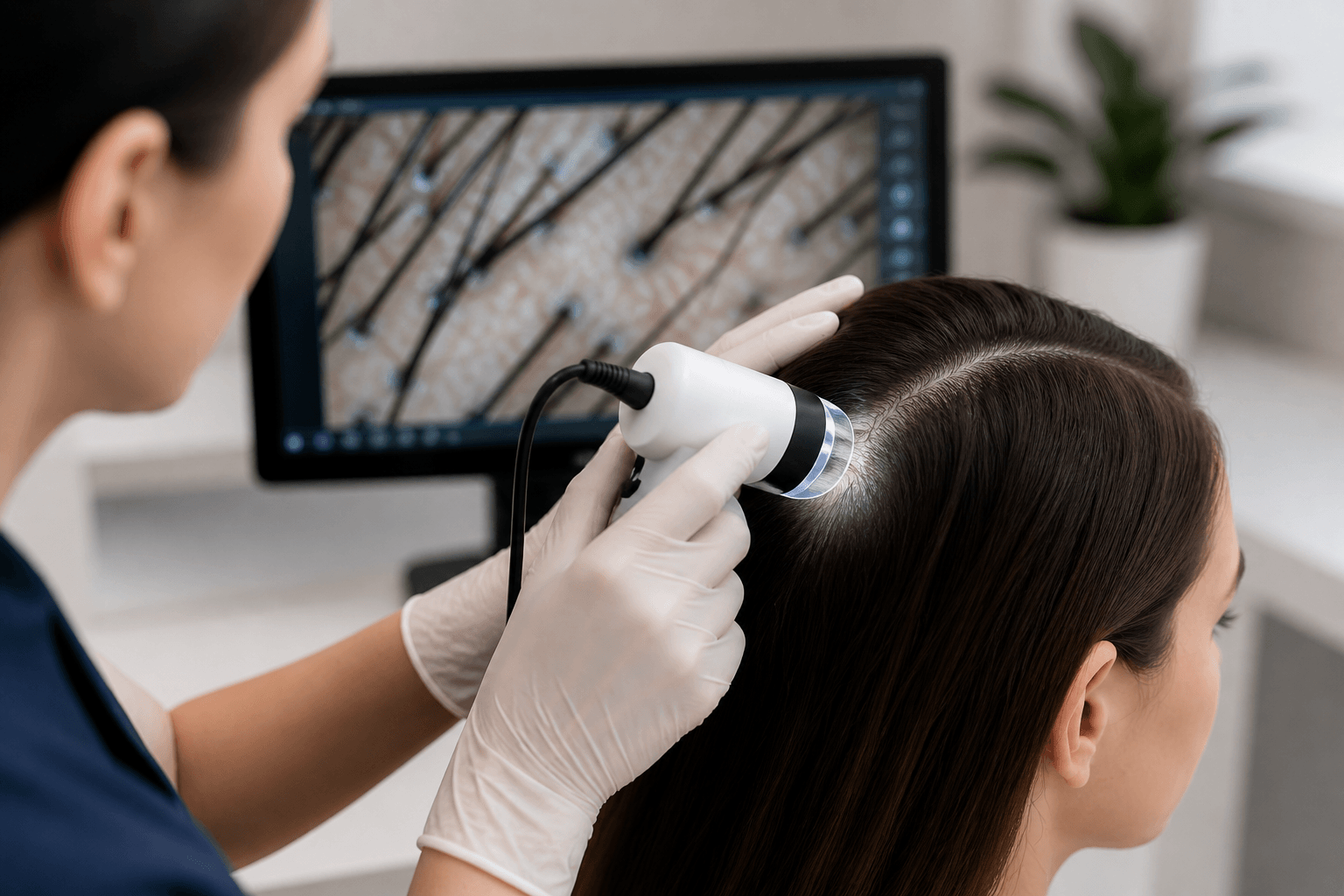
Our specialists evaluate your hair concerns through a detailed consultation, scalp examination, and, where appropriate, Hair Mineral Analysis. The findings are interpreted alongside your medical history and other clinical investigations to help identify possible factors influencing your hair health.
Understanding the Hair Loss Root Cause requires a comprehensive assessment, combining scalp examination, medical history and relevant diagnostic investigations.
Based on your assessment, your personalised care plan may include:
- Nutritional and lifestyle recommendations
- Hair care guidance tailored to your needs
- Targeted scalp and hair treatments
- Additional diagnostic tests where necessary
By combining advanced diagnostic tools with expert clinical evaluation, VCare aims to provide personalised, evidence-based care for individuals experiencing hair concerns.
Conclusion
Hair loss can have multiple contributing factors, making it important to look beyond the symptoms alone. Hair Mineral Analysis offers valuable insights into long-term mineral patterns and potential environmental exposures that may influence hair health.
While it is not a standalone diagnostic test, it can complement clinical examinations and other investigations, helping healthcare professionals develop a more personalised approach to hair loss evaluation.
If you're experiencing persistent hair thinning or excessive shedding, consulting a qualified dermatologist or trichologist can help identify the underlying factors and recommend the most appropriate care. At VCare, Hair Mineral Analysis forms part of a comprehensive assessment designed to support healthier hair through personalised, science-backed treatment plans.
Frequently Asked Questions
1. What is Hair Mineral Analysis?
Hair Mineral Analysis is a laboratory test that measures minerals and trace elements in a small hair sample to assess long-term mineral patterns.
2. What minerals are measured?
The test typically measures essential minerals such as calcium, magnesium, zinc, iron, selenium, along with selected trace elements.
3. Can Hair Mineral Analysis detect vitamin deficiencies?
No. It measures minerals, while vitamin deficiencies are usually assessed through blood tests.
4. Is Hair Mineral Analysis accurate?
Yes, when performed by accredited laboratories and interpreted by qualified professionals.
5. How is it different from a blood test?
Blood tests reflect your current health status, while Hair Mineral Analysis provides information about longer-term mineral patterns.
6. Who should consider this test?
People experiencing persistent hair loss, hair thinning, or those seeking a comprehensive hair health assessment.
7. How long does the test take?
Hair sample collection takes only a few minutes, while results are usually available within 2–4 weeks.
8. Can Hair Mineral Analysis identify causes of hair loss?
It may help identify mineral imbalances or environmental factors that could contribute to hair health as part of a comprehensive evaluation.
9. How should I prepare for the test?
Follow your healthcare provider's instructions and avoid certain hair products if advised before sample collection.
10. When will I receive my results?
Results are generally available within 2–4 weeks, depending on the laboratory. Your healthcare provider will review the findings and discuss the next steps.

 info@vcaretrichology.com
 +91 709 2525 252
 View All Locations


