

Beard Transplant: Procedure, Results & Beard Shaping Explained
Published on 2026-11-20 | By Admin
A patchy beard, uneven growth or sparse facial hair can make achieving your desired beard style difficult. While some men consider a beard transplant to improve facial hair coverage, others explore beard shaping for a sharper, more defined look.
A beard transplant involves transferring healthy hair follicles to areas with insufficient growth, while beard shaping uses hair-reduction techniques to remove unwanted hair and define the beard outline.
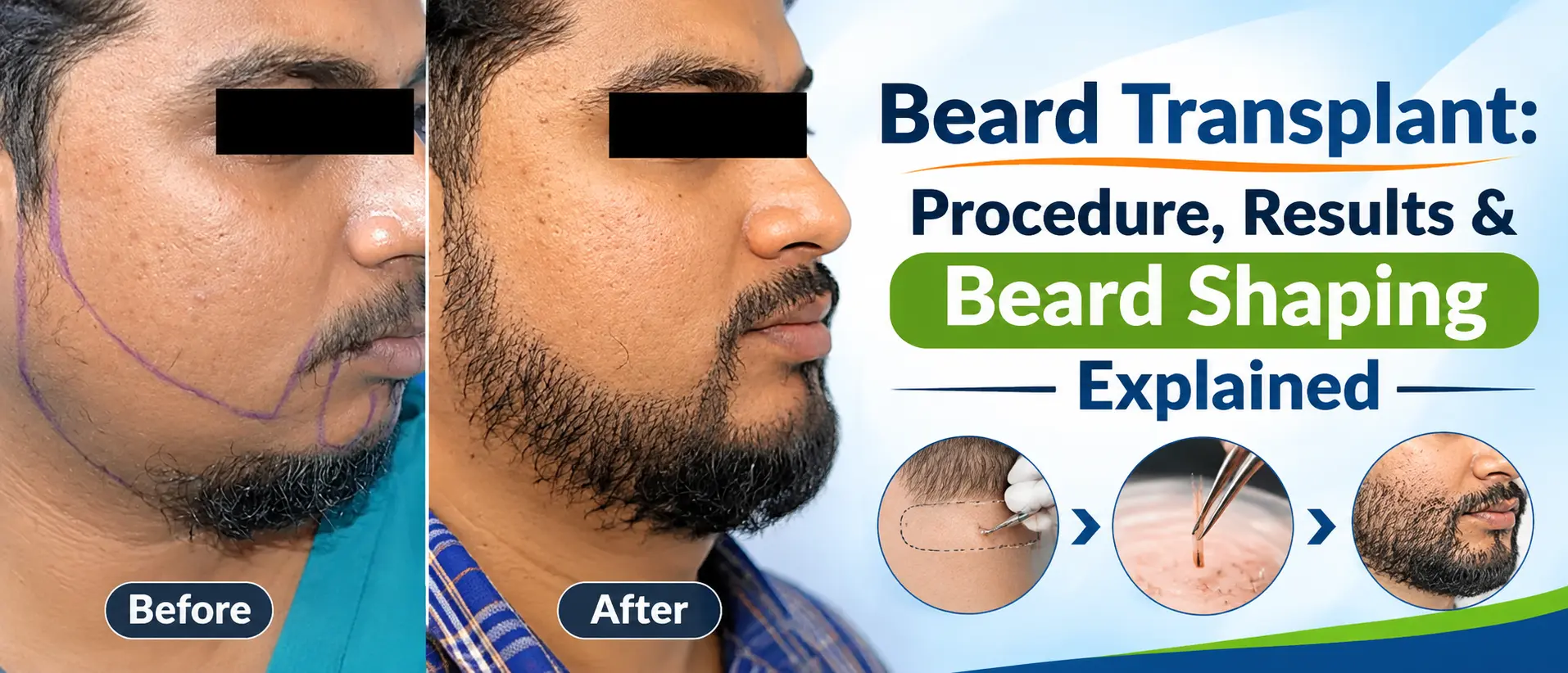
Although both improve beard appearance, they serve different purposes. Understanding their differences can help you choose the right approach.
What Is a Beard Transplant?
A beard transplant is a hair restoration procedure that involves transferring healthy hair follicles, usually from the scalp, to sparse or patchy areas of the beard or moustache. It may be suitable for men with uneven facial hair growth, genetic hair gaps or hair loss due to scarring or injuries.
Since the procedure uses existing hair follicles, donor hair quality and availability are important for achieving natural-looking results.
At VCare, a professional consultation helps assess your suitability and plan a personalised beard transplant procedure.
Who May Consider a Beard Transplant?
A beard transplant may be suitable for men looking to improve facial hair density, coverage or beard shape.
You may consider it if you have:
- Patchy Beard: Uneven growth or visible gaps.
- Sparse Facial Hair: Low density on the cheeks, chin or jawline.
- Limited Moustache Growth: Thin or uneven moustache coverage.
- Scarring-Related Hair Loss: Hair loss caused by scars or injuries.
- Beard Styling Goals: A desire for fuller, more balanced facial hair.
Not everyone is a suitable candidate. A surgeon will assess donor hair availability, skin condition, medical history and expectations. Uncontrolled medical conditions or active skin infections may affect treatment suitability and healing.
Beard Transplant Procedure: How Does It Work?
A beard transplant involves extracting healthy hair follicles from a donor area and implanting them into sparse or patchy beard regions. The procedure is carefully planned to achieve natural-looking facial hair coverage.
1. Donor Area Assessment
The surgeon evaluates hair density, thickness and quality, usually at the back or sides of the scalp, to determine donor hair availability.
2. Hair Follicle Selection
Suitable follicles are selected based on hair texture, thickness, facial proportions and the desired beard density.
3. Follicle Extraction
Healthy hair follicles are carefully extracted from the donor area using the selected transplantation technique.
4. Graft Preparation
Extracted follicles are examined, prepared and preserved under controlled conditions to support graft viability before implantation.
5. Beard Follicle Implantation
The surgeon implants the prepared follicles into the cheeks, jawline, chin or moustache according to the planned beard design.
6. Natural Beard Direction
Each follicle is placed at an appropriate angle and direction to match natural facial hair growth patterns and support a balanced, natural-looking appearance.
The outcome depends on donor hair quality, surgical precision, graft handling and personalised beard design.
Beard Transplant Results: What Can You Expect?
Beard transplant results develop gradually, as transplanted follicles need time to heal, settle and produce new hair growth.
1. Initial Healing
Mild redness, swelling and scabbing may occur after the procedure. Following proper aftercare helps support recovery.
2. Temporary Hair Shedding
Some transplanted hairs may shed during the initial recovery phase. This is an expected part of the hair transplant process.
3. New Hair Growth
As the follicles enter their growth phase, new facial hair gradually begins to appear. Initial growth may look fine or uneven.
4. Improved Beard Density
Over time, transplanted hair may become more noticeable, helping improve beard coverage and fullness.
5. Natural-Looking Results
As growth matures, the transplanted hair can blend with existing facial hair, supporting a fuller, more defined beard appearance.
Remember: Results vary depending on graft survival, donor hair quality, surgical technique and individual healing. Some individuals may require additional sessions to achieve their desired beard density.
What Is Beard Shaping?
Beard shaping is a procedure designed to create a cleaner, more defined beard outline by reducing unwanted facial hair along the cheeks, neck and jawline. Unlike a beard transplant, which adds hair to sparse areas, laser beard shaping uses targeted laser energy to reduce unwanted hair growth and maintain a well-defined beard line.
Multiple sessions may be required, and results vary depending on skin tone, hair colour and individual hair growth patterns.
Since laser hair reduction can produce long-lasting changes, professional assessment is important to plan the desired beard shape and minimise risks such as temporary redness, irritation or pigmentation changes.
Beard Transplant vs Beard Shaping: What's the Difference?
Although both procedures can help you achieve a preferred beard appearance, their purpose and approach are different.
Feature | Beard Transplant | Beard Shaping |
Main purpose | Adds hair to sparse areas | Reduces unwanted hair |
Suitable concern | Patchy or limited beard coverage | Unwanted hair outside the desired beard outline |
Approach | Surgical transfer of hair follicles | Laser-based hair reduction may be used. |
Expected outcome | Improved beard coverage, depending on graft growth | A more defined outline with reduced hair growth in treated areas |
Treatment planning | Depends on donor supply, recipient area and desired density. | Depends on the desired shape, hair characteristics and skin suitability. |
Maintenance | Transplanted follicles can provide lasting growth, though outcomes vary. | Multiple sessions and possible maintenance may be needed. |
In simple terms, choose a beard transplant when the goal is to add coverage, and consider beard shaping when the goal is to reduce unwanted hair and define the outline. A consultation can help clarify which option fits your concern.
How Long Does a Beard Transplant Take to Show Results?
Beard transplant results develop gradually. Transplanted hair may initially shed before new growth begins, with beard density and coverage improving over time.
Results vary depending on graft survival, donor hair quality and individual healing. Your surgeon will assess your progress during follow-up appointments and guide you on expected results.
Explore FUE, AFT Beard Transplantation and Beard Shaping at VCare
A patchy beard and an undefined beard outline are different concerns, and each may need a different approach. At VCare, beard transplantation options such as Follicular Unit Extraction (FUE) and Activated Follicular Transplant (AFT 2.0) may help improve beard coverage in areas with sparse or limited growth. For those looking to refine their beard outline, laser beard shaping offers an option to reduce unwanted hair and create a more defined appearance.
A consultation helps assess your beard growth pattern, donor hair availability and skin characteristics to determine your suitability for the available procedures. Your treatment plan is then tailored to your desired beard style, with realistic expectations discussed before proceeding.
Frequently Asked Questions About Beard Transplant
Is a beard transplant suitable for a patchy beard?
A beard transplant may help improve coverage in selected areas of a patchy beard. Suitability depends on the cause of patchiness, the quality of the donor hair, the condition of the recipient skin and your medical history. A professional assessment is needed to determine whether transplantation is appropriate.
Where are the donor hairs taken from?
Donor hair is commonly taken from the back or sides of the scalp. The surgeon assesses the density and characteristics of the donor hair before deciding how many follicles can be safely harvested.
How Long Does It Take to See Results After a Beard Transplant?
Early new growth may begin around three to four months after surgery. Growth continues over the following months, and the overall result is often assessed around 10–14 months. Individual timelines and outcomes vary.
Is a beard transplant permanent?
Successfully transplanted follicles can provide lasting hair growth. However, the final density and appearance vary, and not every graft is guaranteed to survive. Your surgeon can explain the expected longevity and limitations based on your individual case.
How many grafts are needed for beard transplantation?
The number depends on the size of the area, existing beard density, desired appearance, hair characteristics and donor availability. There is no universal graft count that guarantees a particular result.
Why is hair angle important during beard transplantation?
Beard hair grows in different directions across the face. Implanting follicles at angles that follow these natural patterns helps the transplanted hair blend with existing facial hair. Poor placement can result in an unnatural direction or appearance.
What is the difference between beard transplant and beard shaping?
A beard transplant adds hair to areas with insufficient growth. Beard shaping reduces unwanted hair to create a defined outline, often using laser hair reduction. The right choice depends on whether you want more coverage or less hair in selected areas.
Can beard transplant and beard shaping be done together?
They may be considered together as part of a planned approach, but the treatment areas and timing need professional assessment. Laser treatment should not be performed over a recently transplanted area unless the treating professionals confirm that it is appropriate.
How Many Grafts Are Needed for a Beard Transplant?
The number of grafts depends on the extent of patchy or sparse beard growth, desired density and facial hair design. A hair transplant surgeon will assess your beard pattern and donor hair availability to determine the appropriate graft count.
Can Beard Transplant and Beard Shaping Be Combined?
Yes. A beard transplant improves facial hair coverage, while laser beard shaping defines the beard outline. Both can be combined with proper treatment planning and adequate healing time.

 info@vcaretrichology.com
 +91 709 2525 252
 View All Locations


